E-commerce Website Examples, Case Studies
These are e-commerce website examples from our portfolio: online stores for beauty retailers, fashion and accessories brands, a jewelry brand and manufacturers. Each case shows what the business needed, how the store is structured and what we changed. If you run or plan an online store in the US, they show how we approach this kind of work.
E-commerce platforms


E-commerce platforms

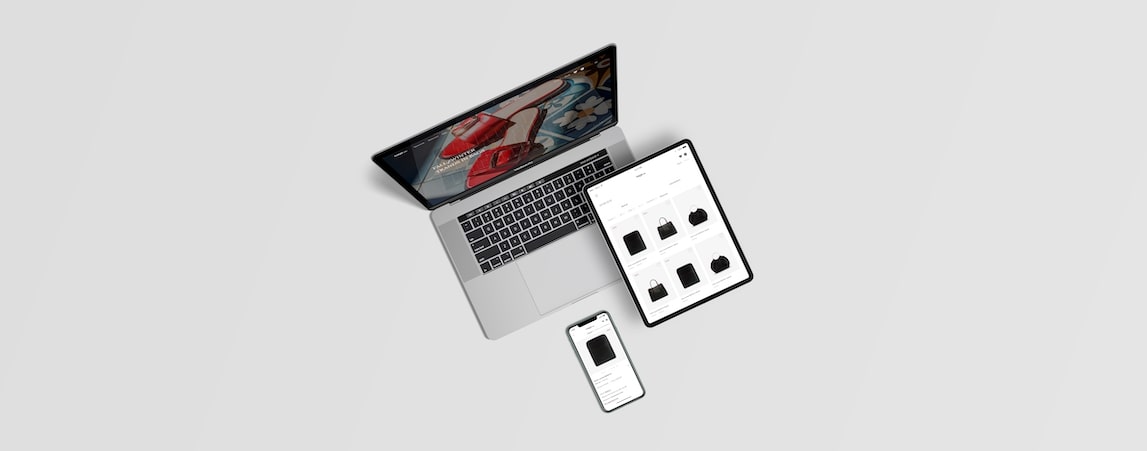
BAGS etc
E-commerce platforms


SPEX
E-commerce platforms


Riccardo
E-commerce platforms


Sport-Discount
E-commerce platforms


U KNOW
E-commerce platforms


Yves Rocher
E-commerce platforms


SHTAYER
E-commerce platforms


HEMST
E-commerce platforms


Skin Health
E-commerce platforms


Magerit
What these online stores have in common
Most stores here belong to brands that sell physical products where details decide the purchase: cosmetics with questions about ingredients and authenticity, clothing and accessories with sizes and collections, jewelry where photos and the brand story carry the sale. The problems we solve repeat from project to project:
- Trust. A buyer has to believe the product is genuine and the shop is reliable before paying.
- Mobile shopping. A large share of orders comes from phones, so the catalog, filters and checkout are designed for a small screen first.
- Real business processes. Wholesale, dropshipping, several customer groups and a CRM often sit behind a retail storefront.
- Growth. A store that has been adding features for years needs a new structure, not one more patch.
Online store case studies
Riccardo is a Ukrainian outerwear manufacturer. We built e-commerce, wholesale, dropshipping and CRM as one digital system that matches how the company actually works, instead of a separate retail site.
Sport Discount had a site that drifted after four years of fast feature shipping. Mobile accounted for 76% of orders, so we rebuilt the store for scale instead of giving it a visual refresh.
Skin Health sells cosmetics in a market where counterfeits are a real concern. We built the platform in four months, focused on a fast and trustworthy shopping experience.
SHTAYER is a store we are rebuilding from the inside out to match the brand's new identity and to serve three distinct customer groups.
HEMST, a growing brand of accessories made from natural materials, needed a fast, simple, conversion-focused store.
Magerit is a Spanish jewelry brand. Our UX/UI design shapes a luxury e-commerce experience around collections, stories and a section for children's jewelry.
The portfolio also includes beauty and fashion retail stores for Yves Rocher, the premium cosmetics brand U KNOW, Trichcosmetics, BAGS etc and SPEX.
How an e-commerce project runs with us
We usually start with a strategic session ($500, credited toward the project) to map the catalog, customer groups, payments, delivery and the systems the store has to work with. Then come structure and UX, design, custom development on Laravel, content and launch. Every client gets a client portal where the plan, files and progress are kept in one place. The work is led from the Seattle area, and the engineering team works remotely.
Planning your own store
If one of these cases looks close to your situation, the next step is our e-commerce development page with scope and pricing. For a store that already sells and needs more search traffic, see SEO for online stores.
FAQ
What kinds of online stores are in this portfolio?
Beauty and cosmetics retail, fashion and accessories brands, a jewelry brand and manufacturers that sell both retail and wholesale. Some cases are new builds, some are rebuilds of working stores, and Magerit is a UX/UI design project.
How much does an online store like these cost?
A custom online store starts from $25,000. The final budget depends on the size of the catalog, integrations such as a CRM or wholesale ordering, and the number of languages.
Can you rebuild an existing store instead of starting over?
Yes. Sport Discount and SHTAYER are both rebuilds of stores that were already selling. We first look at what the current platform does well and what slows sales down, and only then decide what to keep and what to rebuild.