Websites & Social Media for Event Agencies
Event agencies, venues and organizers sell something the client cannot try in advance. A company choosing an agency for a product launch, or a guest deciding whether to register for a conference, judges by what they can see: past events, photos and video, the program, the venue and the way the team presents itself on Instagram. For event businesses in Seattle and across the US, the website and social media work as the showroom. They have to show the work at its best, answer practical questions fast and turn interest into a brief or a registration. To sell tickets and fill registrations, we also run event advertising on Meta and Google.

What we build for the event industry
- Event agency websites: a portfolio of events by format, services, the way you work and a brief form. See corporate website development.
- Landing pages for a single event: date, venue, program, speakers, partners and a registration form on one page. More on landing page development.
- Venue websites: halls and spaces with capacity, photos and layouts, plus an availability request.
- Social media and content: an editorial Instagram, content plans, photo and video stories after each event. See social media marketing.
- Paid campaigns on Meta that bring registrations to an event page, with Meta ads management.
- Google search ads for people already looking for a conference in their field, a venue or an event agency, with registrations and brief requests tracked to each campaign.
- Ad banners and creatives for ticket sales and registration, built on the event's key visual: speakers, dates and venue in every format for Meta, Google, partner sites and the event page.
What matters online for event businesses
The portfolio sells. Each past event works best as a short story: the task, the format, the number of guests, the key visuals. A gallery without context says little to a client who has to justify a budget.
Heavy media, fast pages. Event sites live on photo and video. Images and clips need careful preparation and delivery, or the pages load slowly on a phone, which is where most people open a link from Instagram.
A brief form instead of "contact us". Date, city, format, number of guests and budget range help your team qualify a request before the first call.
Easy updates under deadline. Programs change, speakers are added and registration closes. Your team should be able to edit the page in an admin panel without waiting for a developer.
One brand across the site and social media. Clients often see your Instagram first and the website second. Both should look and sound like the same company.
Event projects in our portfolio
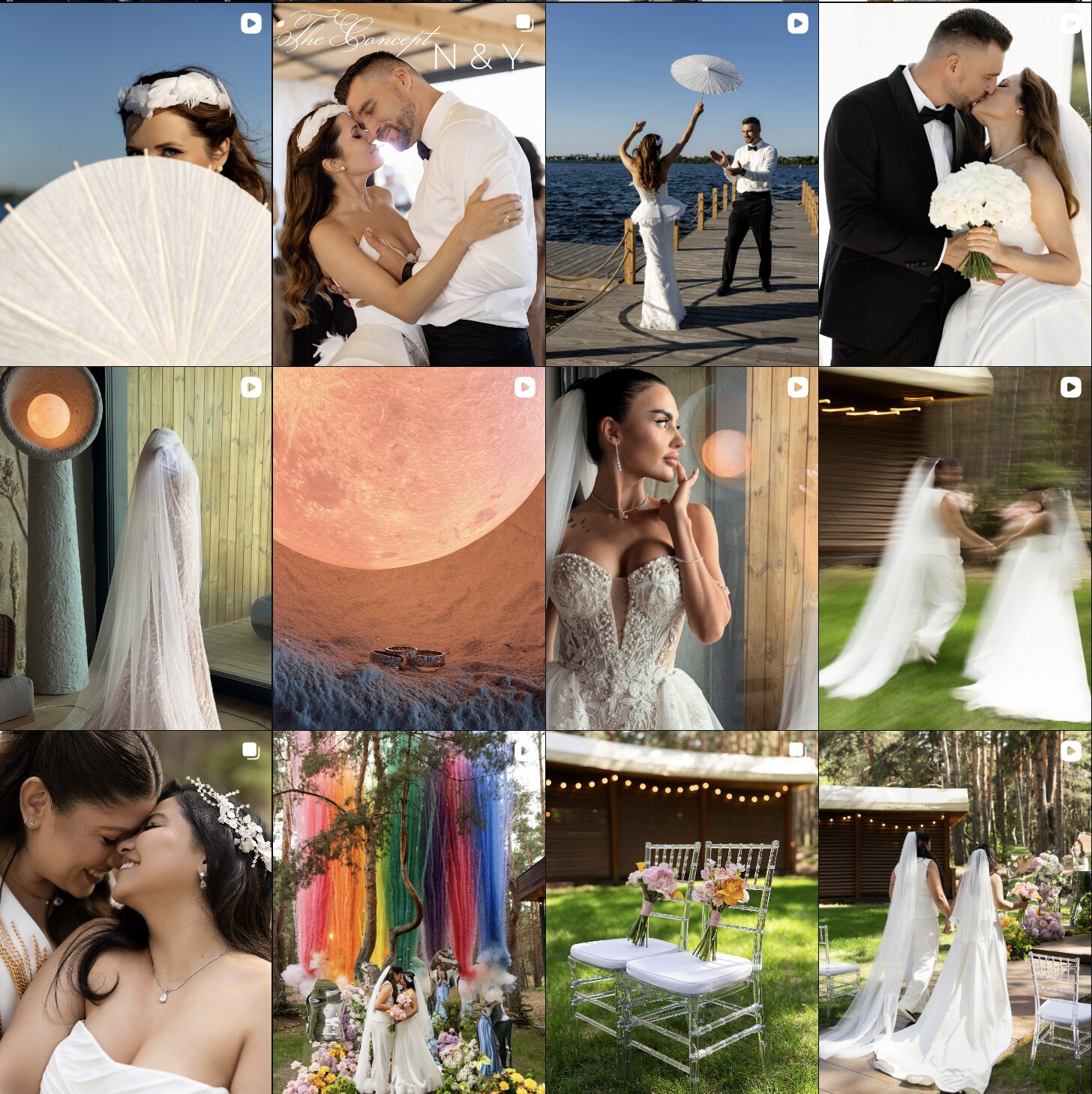
- Sineta Event Team: SMM and editorial storytelling for a premium event agency. We turned its Instagram into a digital luxury editorial, and the case reports more than 1.74 million views.
- National Trichology Symposium: a landing page for a national professional symposium, the single-page format that suits conferences and congresses.
Both projects were done for clients in Ukraine, and we apply the same approach to event businesses in the US. Typical budgets: a landing page for an event from $4,000, an agency or venue website $20,000-40,000. Projects start with a strategic session ($500, credited toward the project).
FAQ
Do we need a full website or a landing page for each event?
An agency or a venue usually needs a full website with a portfolio and services. A conference, festival or symposium is often better served by a dedicated landing page with the program and registration, launched on its own timeline. Many organizers use both.
Can you run our social media as well as the website?
Yes. We handle social media strategy and content, so the site and Instagram follow the same visual language and tone. The Sineta Event Team case shows this editorial approach.
How much does a website for an event agency cost?
A landing page starts at $4,000. A website for an agency or venue with a portfolio, services and request forms is usually $20,000-40,000. The figure depends on the number of pages, languages and integrations such as a CRM or ticketing.
Can you run ads to sell tickets or fill registrations?
Yes. We plan campaigns around the event timeline: the announcement, early-bird pricing, the speaker lineup and the last days before registration closes. We run Meta ads and Google search ads, design the banners in the event's key visual and track registrations or ticket sales by campaign, so the budget goes where it works.