


Most e-commerce businesses treat their blog as an afterthought. The ones that don't consistently outrank and outsell those that do.
In 2026, organic search remains the highest-converting traffic source for e-commerce — and a well-executed blog is the most cost-effective way to capture it.
Not because blogging is trendy. Because it compounds.
A product page drives traffic for one keyword. A blog article can drive traffic for dozens — pulling in buyers at every stage of the decision process, months and years after it's published.
Here's what a blog actually delivers for an e-commerce business in 2026 — and how to build one that works.
What a Blog Actually Does for Your Store
1. It Captures Buyers Before They're Ready to Buy

Most people who will eventually buy your product aren't searching for your product yet. They're searching for information — how to choose it, what to look for, how it compares to alternatives.
A blog positions your store as the answer to those questions. By the time they're ready to buy, you're already the brand they trust.
2. It Compounds Over Time
Paid ads stop the moment you stop paying. Blog content keeps generating traffic for months and years with zero additional spend.
An article published today can be ranking on page one of Google six months from now — and driving qualified buyers to your store while you sleep.
3. It Reduces Your Cost Per Acquisition
Every organic visitor who arrives through your blog content costs you nothing beyond the initial investment in writing it. As your content library grows, your cost per acquisition from organic search drops consistently.
4. It Builds Brand Authority

In competitive e-commerce categories, price and product alone rarely win. Trust wins.
A blog that consistently publishes useful, expert content signals to both Google and your potential customers that you know your category deeply. That signal translates directly into conversion rates.
What to Write About: Finding Topics That Drive Revenue
The biggest mistake e-commerce businesses make with their blog is writing about what they find interesting — rather than what their customers are actively searching for.
Here's how to find topics that actually drive traffic and sales:
Search intent analysis. Start with your product category and build out the information landscape around it. If you sell outdoor gear, your customers are searching "how to choose a hiking backpack," "best trail running shoes for beginners," "waterproof jacket vs rain jacket" — all before they ever search for a specific product.
Competitor gap analysis. Use tools like Ahrefs or Semrush to find keywords your competitors rank for that you don't. Every gap is an opportunity.
Customer questions. Your support inbox, product reviews, and social comments are a content goldmine. Every question a customer asks is a topic someone is searching for.
Seasonal and trend content. Gift guides, seasonal product roundups, and trend-driven content capture high-intent buyers at the exact moment they're ready to purchase.
Content Types That Work for E-Commerce in 2026

Buying guides. "How to choose [product category]" articles attract buyers at the research stage and convert them into customers. These are among the highest-value blog posts an e-commerce store can publish.
Comparison posts. "[Product A] vs [Product B]: which is right for you?" — buyers actively search for these before making decisions. If you sell both, this content keeps them on your site regardless of which direction they go.
How-to and tutorial content. Show your products in use. Demonstrate expertise. Video content embedded in blog posts performs particularly well in 2026 — Google prioritizes pages with genuine multimedia value.
Behind-the-brand content. Who makes your products? What's your sourcing story? What values drive your business? This content builds the emotional connection that turns one-time buyers into repeat customers.
User-generated content features. Customer stories, reviews in depth, community spotlights — this content builds trust and costs almost nothing to produce.
How to Structure Your Blog for SEO in 2026
Publishing great content isn't enough if it's not structured for search.
Every blog post should target a specific keyword or topic cluster. Use your primary keyword in the title, first paragraph, at least one subheading, and the meta description.
Write for depth, not length. A focused 1,000-word article that fully answers a specific question outperforms a padded 3,000-word article that says the same thing multiple ways.
Link internally. Every blog post should link to relevant product pages, category pages, or related articles. This distributes authority through your site and keeps readers engaged longer.
Update content regularly. Google rewards freshness. Revisiting and updating high-performing articles with new data, examples, or sections is one of the highest-ROI SEO activities you can do.
The Reality of E-Commerce Blogging in 2026
A blog is not a quick win. The businesses that treat it as a long-term content asset — publishing consistently, optimizing systematically, and measuring what works — are the ones that build organic search channels that generate revenue for years.
The businesses that publish five articles and give up because they "didn't see results in two months" miss the point entirely.
Content compounds. Start now, stay consistent, measure obsessively.

Building Your E-Commerce Digital Presence
At Peretz Agency, we design and develop custom e-commerce platforms built for performance — fast, conversion-optimized, and structured for long-term SEO growth.
If your store needs a digital foundation that can support a serious content strategy — let's talk.
- Share
-

-

-

-

Related Reading
-
14. 02. 2021
Link Building in 2026: Why It Still Matters and How to Do It Right

-
30. 11. 2020

The case of Laduchi
-
14. 02. 2021
SEO Copywriting in 2026: What Actually Ranks — and What Converts
-
02. 12. 2020
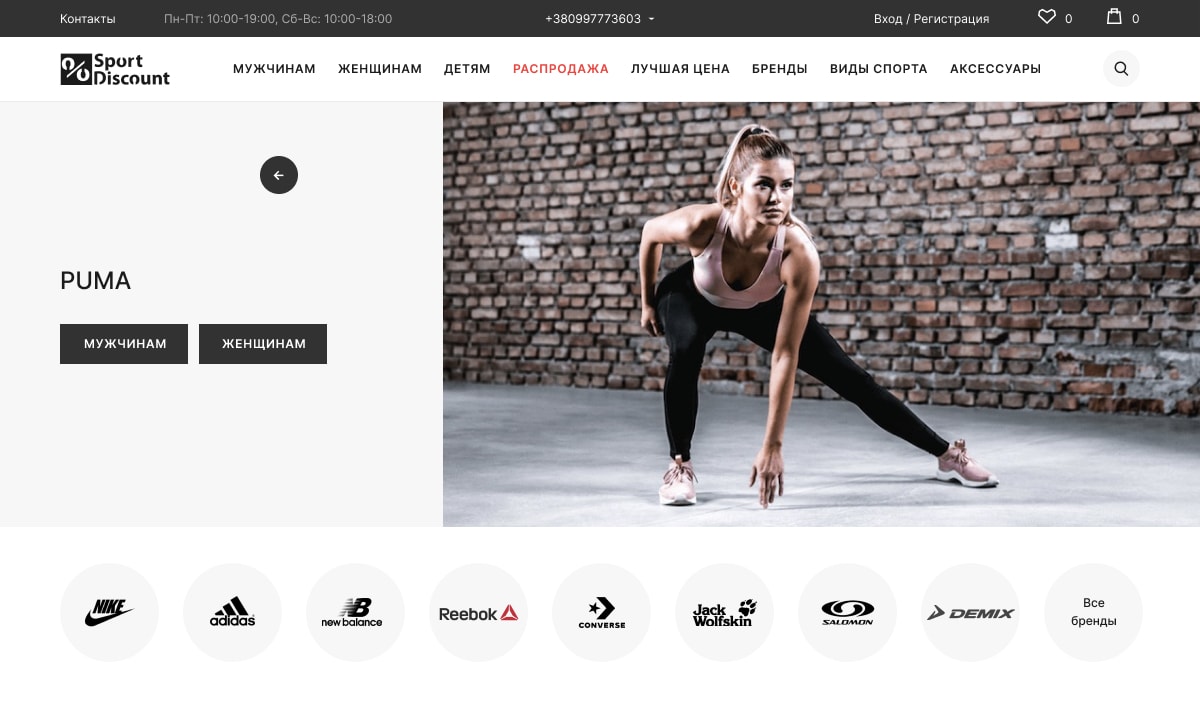
Redesign of Sports Online Store Sport Discount
-
19. 11. 2020
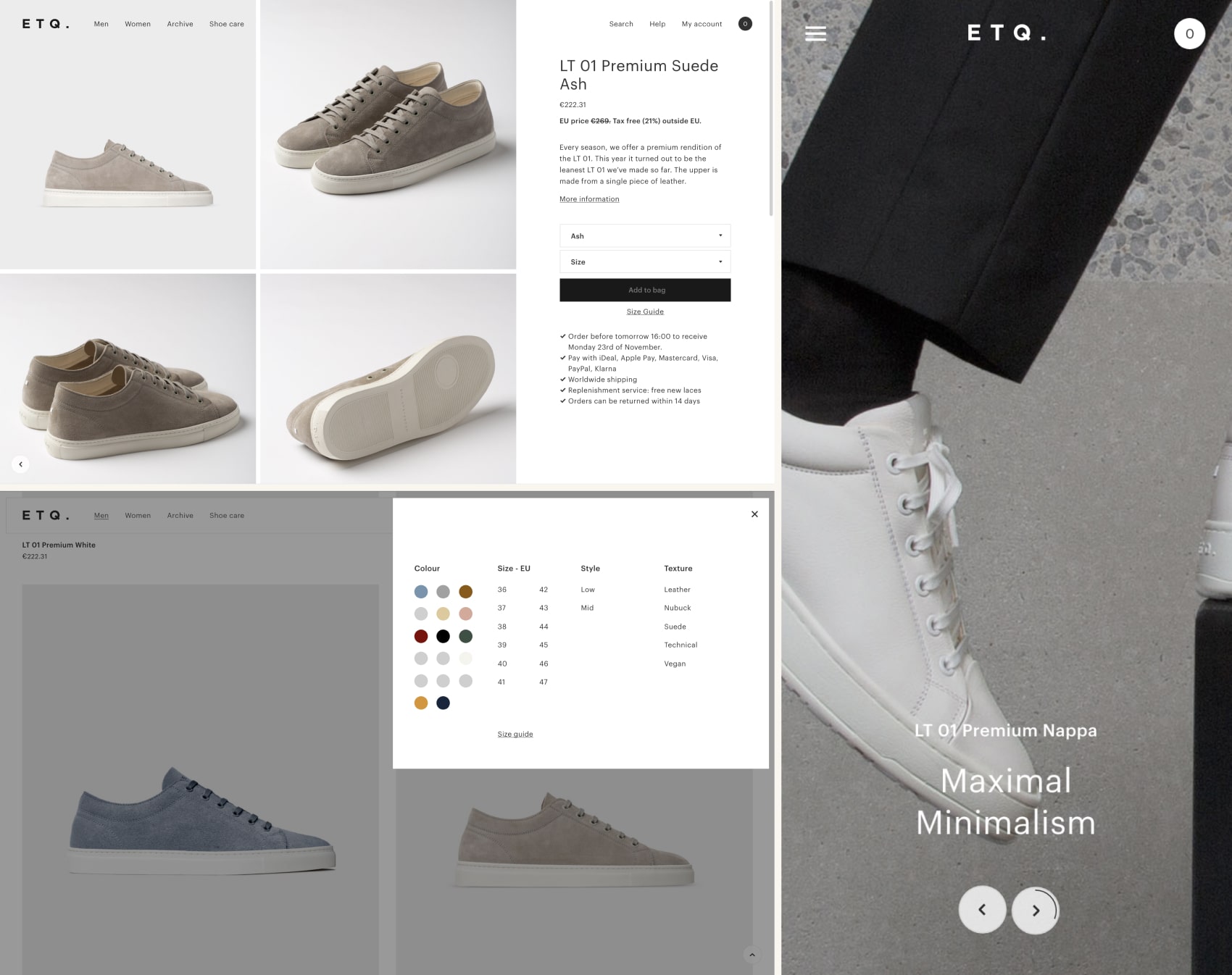
10 Best Online Store Designs in 2026 and What Makes Them Work
-
14. 02. 2021
Link Building in 2026: What Works and What Doesn’t
-
18. 06. 2026

Website Redesign Seattle | We Build Sites That Generate Leads
-
18. 06. 2026

How Much Does a Website Cost in Bellevue WA in 2026?
-
01. 02. 2021
Why Responding to Online Reviews Matters in 2026 — And How to Do It Right
-
13. 11. 2020
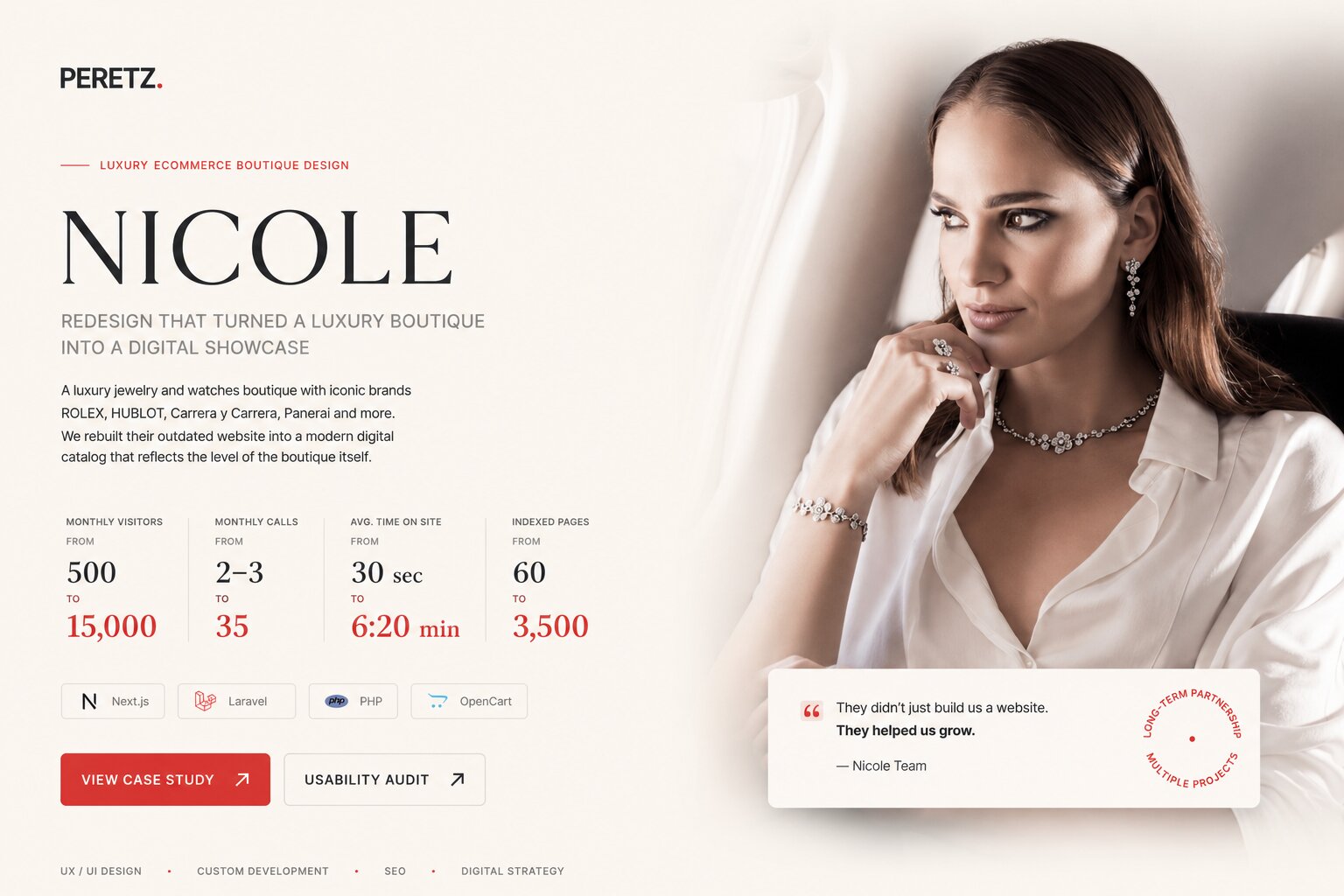
Why Launching a New Site Is Good for SEO: The Nicole Case
-
20. 06. 2026
SMM Agency vs Freelancer: What's Better for a Small Business in 2026?
-
24. 06. 2026

How to Choose a Web Design Agency in Seattle: A Business Owner’s Guide for 2026
-
25. 06. 2026

Website Redesign vs New Website: How to Make the Right Decision in 2026
-
26. 06. 2026
How to Build a Social Media Strategy That Actually Generates Leads
-
29. 06. 2026

How AI Is Changing Product Development in 2026 (But Great Ideas Still Win)
-
30. 06. 2026

The Most Expensive Mistake Business Owners Make Before Hiring a Digital Agency
-
02. 07. 2026

I've Rebuilt My Career Twice Because of War. Here's What That Actually Teaches You About Strategy.
-
04. 07. 2026

What Working With a Kindergarten Taught Me About B2C Trust — And What Every Premium Brand Needs to Hear
-
07. 07. 2026

Human-First Content Strategy: Why AI Content Is Losing the Trust War in 2026
-
29. 07. 2026

The Hidden Cost of Standing Still: Why Modern Businesses Lose Competitive Advantage Long Before They Notice