
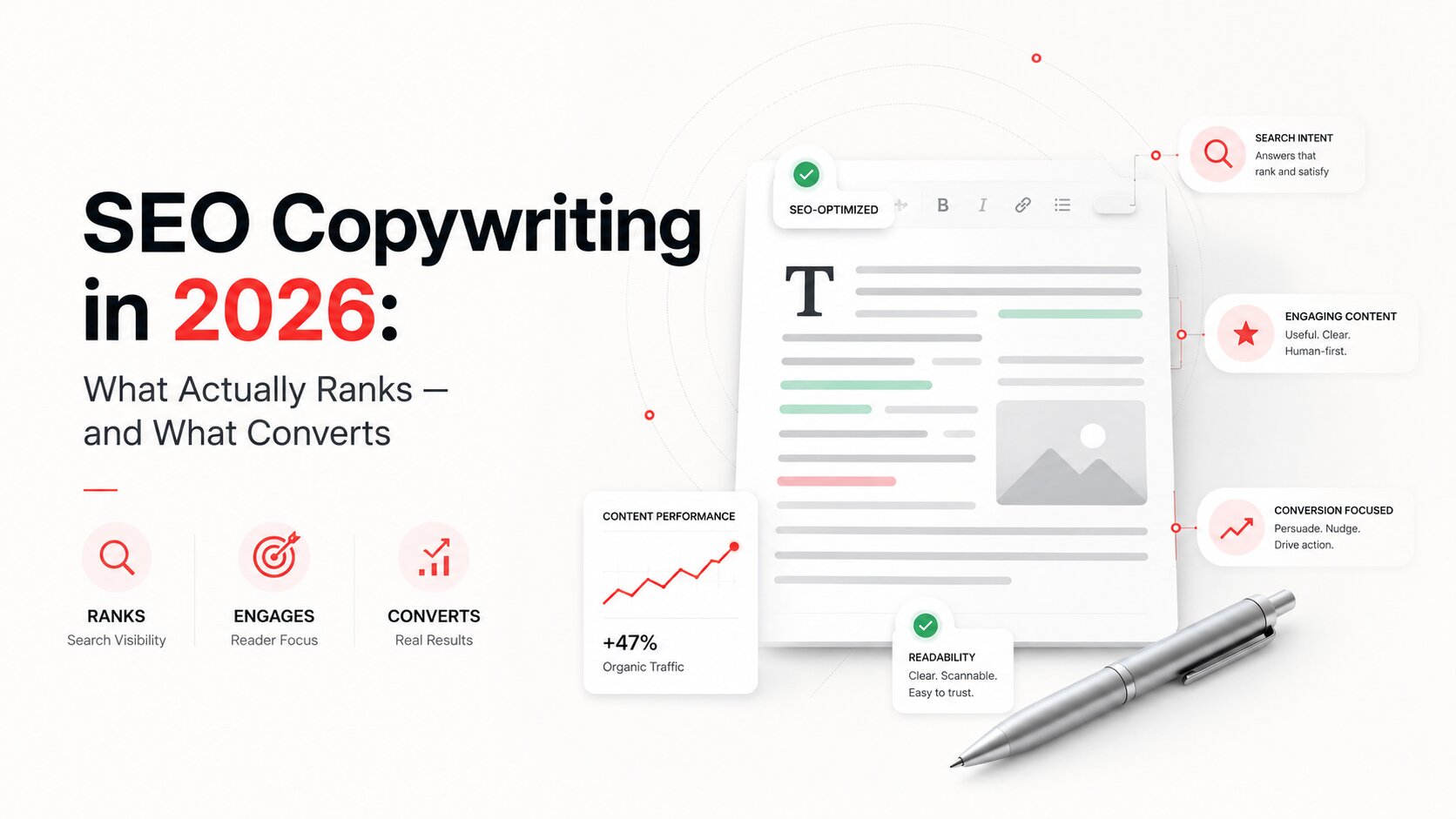
Google no longer rewards keyword density. It rewards expertise, depth, and content that genuinely answers what people are searching for.
The rules of SEO copywriting have changed more in the last two years than in the previous decade. The arrival of AI-generated content at scale forced Google to completely rethink how it evaluates text quality.
The result: generic, keyword-stuffed content is actively penalized. Original, authoritative, well-structured content performs better than ever.
Here's what SEO copywriting looks like in 2026 — and why it matters for your business.
CONTENT FIRST
Why Content Is Still the Foundation of SEO
Google processes over 8.5 billion searches per day. Behind every search is a person with a specific intent — to learn something, solve a problem, or make a purchase decision.
Your content either answers that intent better than your competitors — or it doesn't rank.
No amount of technical SEO, backlinks, or page speed optimization compensates for content that fails to deliver genuine value to the reader.
In 2026, the businesses ranking at the top of Google for competitive keywords in Seattle and beyond share one common trait: they publish content that their target audience actually wants to read.
WHAT CHANGED
What Changed in 2026
AI content flooded the internet.
Within two years of accessible AI writing tools, Google's index was overwhelmed with thin, auto-generated content. Google's response was E-E-A-T — Experience, Expertise, Authoritativeness, and Trustworthiness — as a core quality signal.
Content written by named experts with demonstrable experience now outranks anonymous AI-generated articles, even when the AI output is technically well-optimized. What content is still worth when anyone can publish at scale is the subject of When Everyone Can Publish 500 Articles, What Is Content Worth?
Search intent matters more than keyword frequency.
Modern Google doesn't count how many times your keyword appears. It evaluates whether your page comprehensively addresses the topic — including related questions, subtopics, and real-world context.
Content length is not a ranking factor — relevance is.
A focused 800-word article that fully answers a specific question outperforms a padded 3,000-word page that repeats itself. Quality over volume, always.
STRUCTURE
The Structure of High-Performing SEO Content in 2026
1. Search Intent First
Before writing a single word, understand what the searcher actually wants.
Informational intent: the reader wants to learn. Give them depth, examples, and real insights.
Commercial intent: the reader is evaluating options. Give them clear comparisons, proof, and reasons to choose you.
Transactional intent: the reader is ready to act. Make the path to conversion frictionless.
2. A Title That Earns the Click
Your headline is the first and often only thing a searcher reads before deciding whether to visit your page.
Effective SEO titles in 2026 are specific, promise clear value, and reflect exactly what the content delivers. Vague or clickbait titles increase bounce rates — which signals low quality to Google.
3. Structure That Guides the Reader
Long blocks of unbroken text lose readers within seconds. Well-structured content uses clear headings, logical progression, and formatting that allows scanning without sacrificing depth.
Structure also signals topic comprehensiveness to Google — covering the subject from multiple angles rather than repeating the same point with different words.
4. Original Insight and Expertise
The single biggest differentiator in 2026 SEO is genuine expertise.
Anyone can generate a list of SEO tips. Not anyone can write about what they've actually observed working with clients in competitive US markets — what conversion rates look like, what real website development costs in Seattle, what clients actually ask before signing a contract.
That experiential layer is what Google's quality systems are designed to detect and reward.
5. A Clear Path to Action
Every piece of content on your website should have a purpose beyond ranking. The reader who finishes your article should know exactly what to do next — whether that's contacting you, reading a related article, or downloading a resource.
Conversion is the ultimate measure of content quality.
SERVICE BUSINESSES
SEO Copywriting for Service Businesses in Seattle
For professional service firms — web design agencies, consulting firms, law firms, architecture studios — content strategy in 2026 focuses on three types of pages:
Service pages that clearly communicate what you do, who you do it for, and why you're the right choice. Optimized for commercial and transactional search intent.
Location pages targeting specific markets. "Web design agency Seattle," "custom website development Bellevue" — these pages convert at significantly higher rates than generic service descriptions.
Blog content that addresses real questions your prospects are searching for — like the cost of a custom website, the difference between templates and custom development, or how to evaluate a web design agency.
Together, these three content types build a comprehensive SEO architecture that captures prospects at every stage of the decision process.
OUR APPROACH
How Peretz Agency Approaches Content
We don't separate SEO and copywriting. Every piece of content we produce for clients is built around three simultaneous goals: ranking for relevant search terms, communicating genuine expertise, and moving the reader toward a decision.
If your current website content isn't performing — either in search rankings or in conversions — the problem is usually not your product or service. It's how your digital presence communicates its value.
NEXT STEP
Ready to Build Content That Works?
Peretz Agency builds custom websites and digital content systems for businesses in Seattle, Bellevue, and across the US market.
Let's talk about what your content strategy is missing.
- Share
-

-

-

-

Related Reading
-
30. 11. 2020

The case of Laduchi

-
20. 12. 2020
Why Your E-Commerce Store Needs a Blog in 2026 — And How to Start One That Actually Works
-
14. 02. 2021
Link Building in 2026: What Works and What Doesn’t
-
16. 03. 2021
Which Business Functions Should You Outsource in 2026?
-
20. 06. 2026
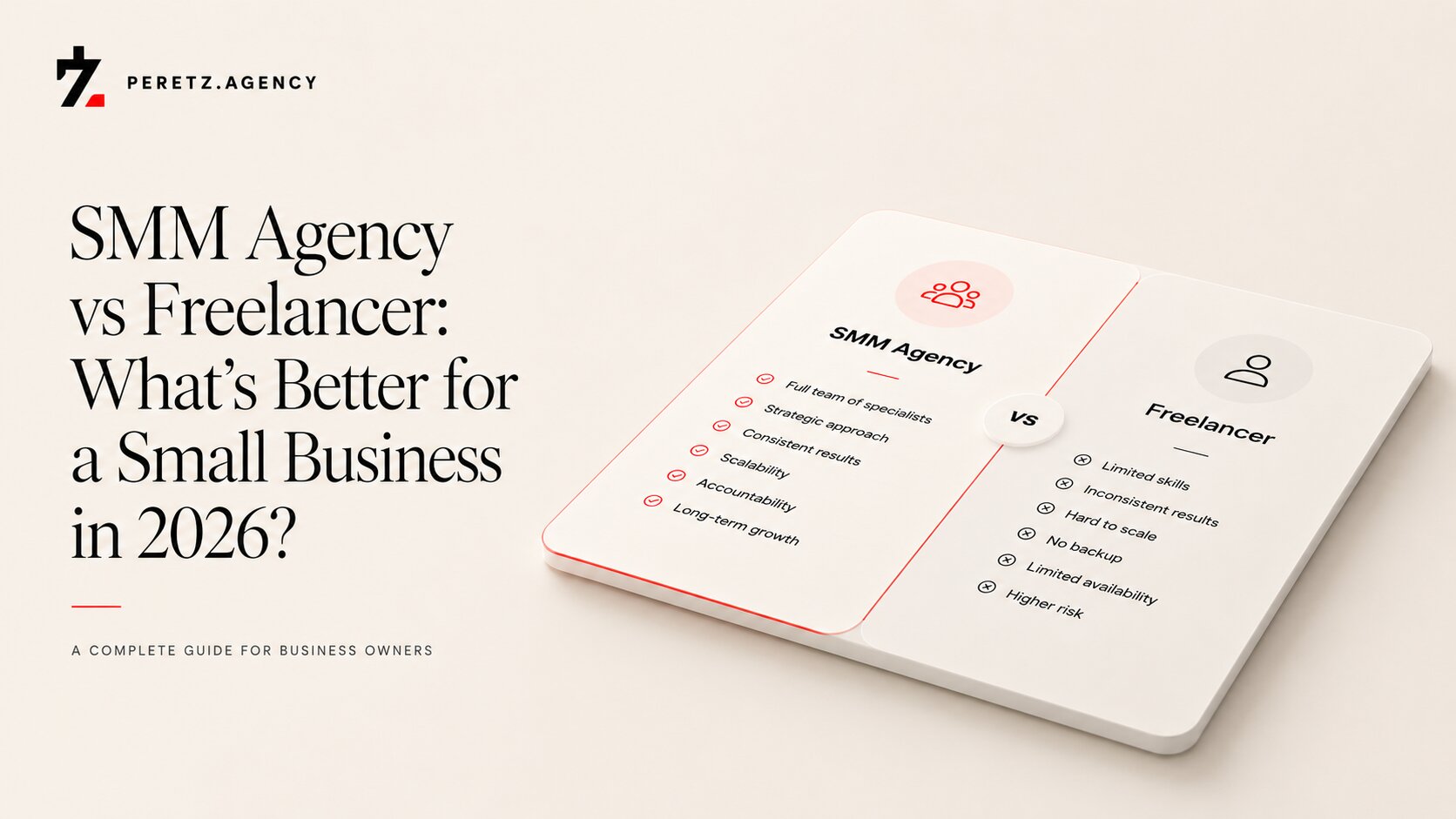
SMM Agency vs Freelancer: What's Better for a Small Business in 2026?
-
04. 07. 2026
What Twenty Years Taught Me About Building Digital Businesses
-
07. 07. 2026
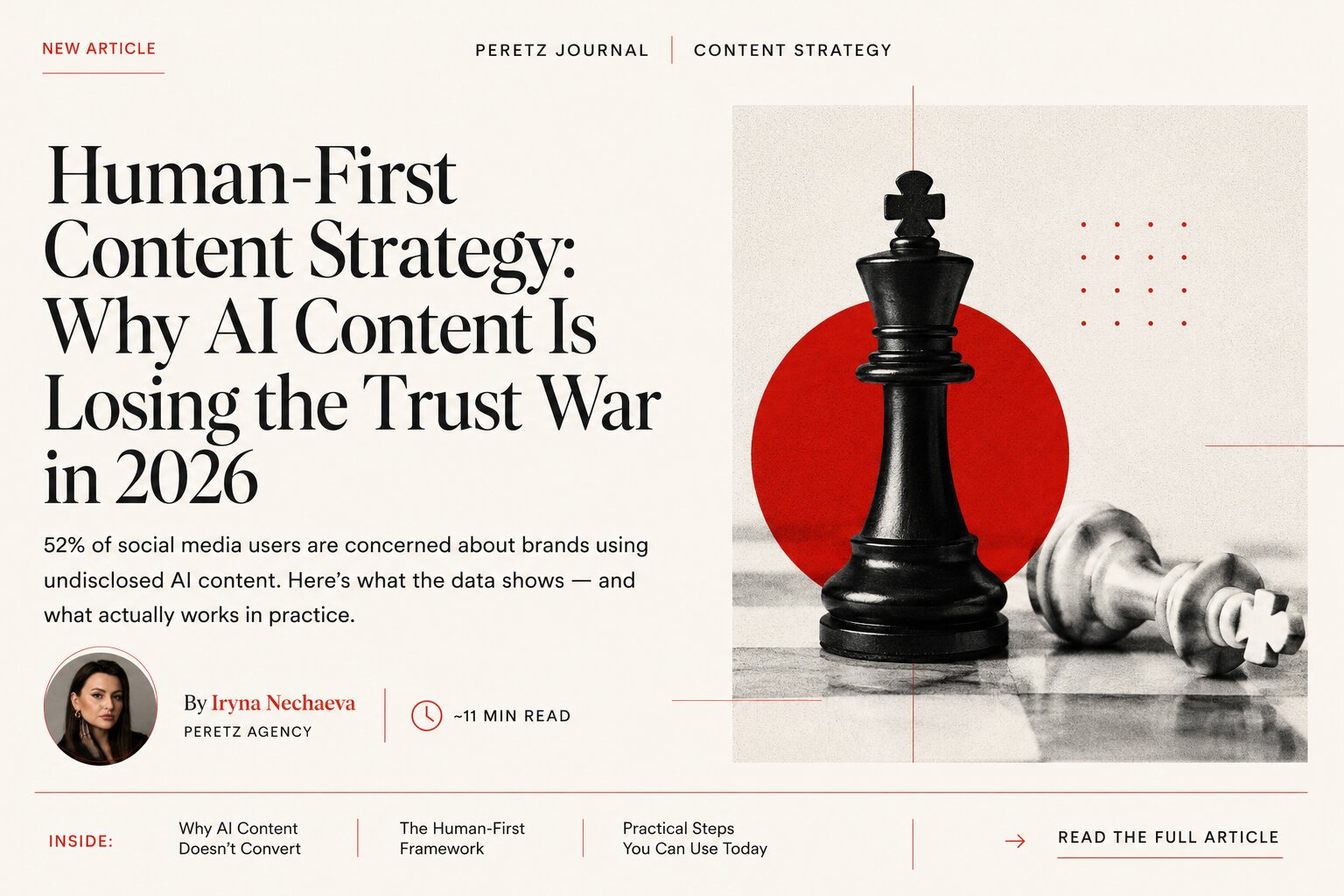
Human-First Content Strategy: Why AI Content Is Losing the Trust War in 2026
-
08. 07. 2026
Threads vs X in 2026: Which Platform Should Your Business Actually Be On?