

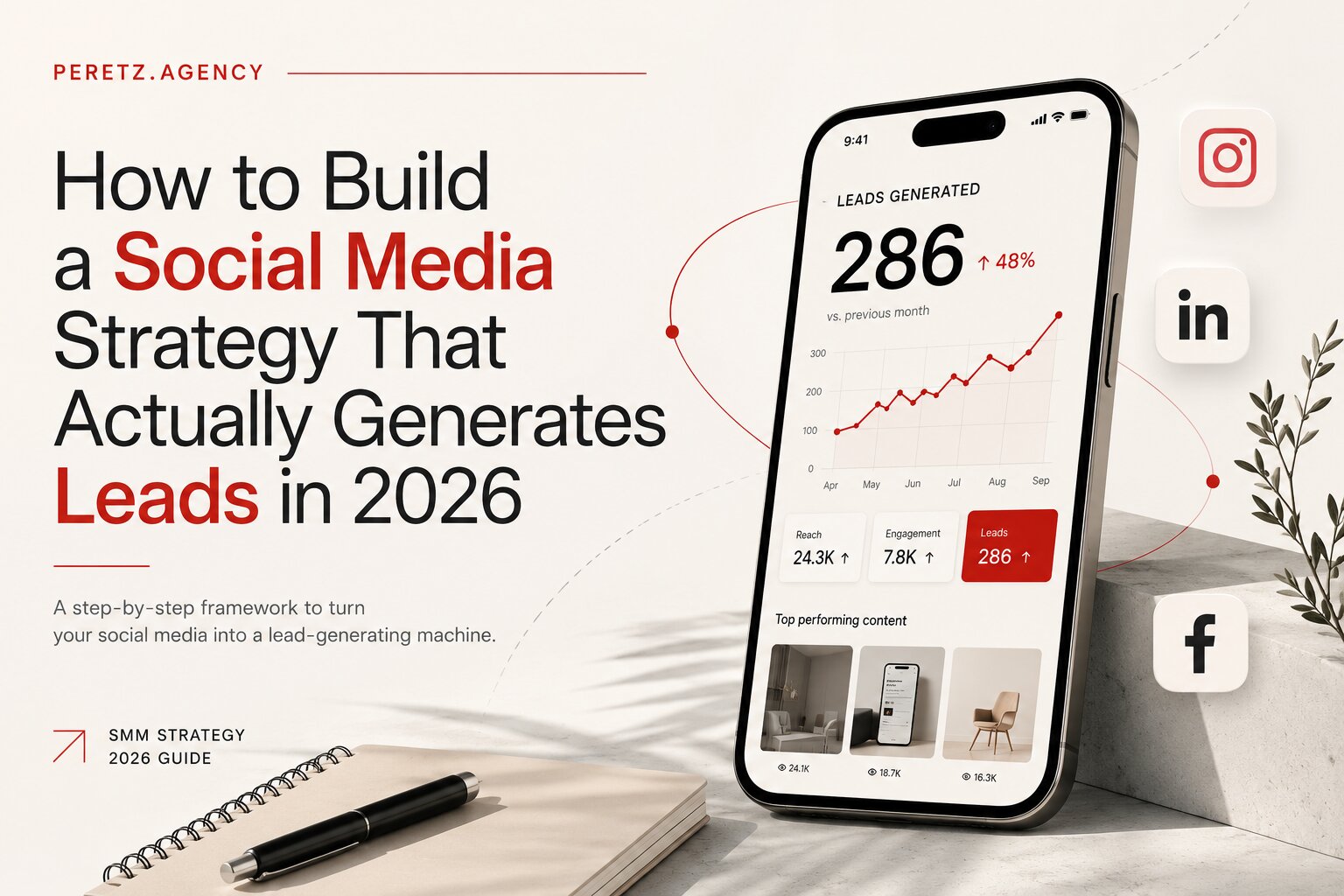
Here's the uncomfortable truth about most social media strategies: they're designed to look busy, not to generate business.
Three posts a week. Some Reels. A few hashtags. Decent engagement. Zero leads. The business owner wonders why they're paying for it. The SMM specialist wonders why the client is unhappy. The strategy was never designed to do the one thing the business actually needed — bring in new customers.
In this guide, I'm going to show you how to build a social media strategy from scratch that is structurally designed to generate leads — not just likes. This is the exact framework we use at Peretz Agency for our US clients, and it works across industries.
Key premise: Social media doesn't generate leads by accident. It generates leads when every element — platform choice, content mix, CTAs, paid amplification, and follow-up — is deliberately engineered to move people through a funnel. Without that design, you're just creating content into the void.
Step 1: Start With Business Goals, Not Platform Goals
Most social media strategies fail before they start because they're built backward — starting with 'what should we post on Instagram' instead of 'what business outcome do we need social media to drive.'
Before you touch a content calendar, answer these questions:
- What is the specific outcome you want from social media? (Leads, sales, demo requests, store visits, newsletter signups)
- How many leads per month would make social media a worthwhile investment for your business?
- What is a lead worth to your business? (Average deal value × close rate)
- What does the path from 'social media follower' to 'paying customer' look like for your specific business?
Only once you have clear, measurable goals can you build a strategy to achieve them. The goal 'grow our Instagram' is not a business goal. The goal 'generate 20 qualified leads per month from Instagram at a cost under $50 per lead' is.
SMART goal example: By September 30, 2026, generate 25 qualified leads per month from Instagram + Facebook combined, with a cost per lead under $40, resulting in at least 5 new clients per month at our average deal value of $2,000.
Step 2: Choose 2 Platforms — Not 6
In 2026, the most common mistake in social media strategy is platform sprawl: trying to be active on Instagram, Facebook, LinkedIn, TikTok, X, Pinterest, and YouTube simultaneously with a team of one or two people.
The result is mediocre content on six platforms instead of great content on two. Algorithms in 2026 reward deep investment in a platform, not shallow presence across many.
Platform selection framework for US businesses:
- B2C local business (restaurant, salon, clinic, gym): Instagram + Facebook. Overlapping Meta ecosystem, highest ROI for local service businesses.
- E-commerce brand: Instagram + TikTok. Visual discovery + impulse purchase behavior.
- B2B service business (agency, consulting, SaaS): LinkedIn + Instagram. Professional credibility + humanized brand presence.
- Professional services (legal, financial, medical): LinkedIn + Facebook. Trust-based content formats work best here.
Pick two. Go deep. Master them completely before expanding. According to HubSpot's 2026 Content Strategy Report, 68.9% of high-performing brands use 5+ channels — but they build mastery in 2 before scaling.
Step 3: Define Your Content Pillars
Content pillars are the 3–5 recurring themes your account consistently covers. They're the answer to 'what do we talk about?' — and they should map directly to your business goals and audience needs.
The ratio that works in 2026 for lead generation:
- 40% Education — teach your audience something valuable related to your expertise. This builds authority and attracts people who need what you sell.
- 25% Social Proof — case studies, testimonials, results, transformations. Shows that you deliver on your promises.
- 20% Behind the Scenes / Human — team, process, culture, personality. People buy from people they trust.
- 15% Direct Offer — clear CTAs, promotions, consultations, services. The sell.
The mistake most businesses make: 60% promotional content, 40% 'filler' posts. Your audience isn't following you to see ads — they follow because they get value. If you flip the ratio and lead with value, the 15% of promotional content converts dramatically better.
Step 4: Design a Content-to-Lead Funnel
This is the piece most SMM strategies completely skip — and it's the reason most accounts never generate leads no matter how good the content is.
A content-to-lead funnel means every piece of content has a defined role in moving someone from 'first encounter' to 'ready to buy'. Here's what the funnel looks like:
Top of Funnel (TOFU): Awareness Content
Goal: reach people who don't know you yet. These are Reels, educational carousels, and short-form videos that answer questions your target customer is already searching for. The metric that matters: Reach and new accounts reached.
- Example: 'The #1 reason your website is losing customers' (educational hook, broad appeal)
- Example: 'How to know when your business is ready for paid social media ads'
Middle of Funnel (MOFU): Consideration Content
Goal: convert strangers into engaged followers and warm prospects. These are deeper content pieces — case studies, process breakdowns, comparison posts — that establish your expertise. Metrics: profile visits, saves, follows, Story replies.
- Example: 'How we grew a local restaurant's Instagram from 400 to 4,200 followers in 90 days (case study)'
- Example: 'Agency vs freelancer: what we've seen actually works for US small businesses'
Bottom of Funnel (BOFU): Conversion Content
Goal: turn warm followers into leads. These are direct offer posts, time-sensitive CTAs, and social proof content. Metrics: DMs, link clicks, form fills, booking page visits.
- Example: 'We have 3 spots open for new SMM clients in July — here's how to apply'
- Example: 'Free 30-minute strategy audit for US businesses — 8 spots left this month'
The funnel works through sequencing: TOFU content reaches new people → MOFU retargets them with your story → BOFU converts the warm audience. Running all three simultaneously is what separates a lead-generating strategy from a random posting schedule.
Step 5: Build Your Lead Capture Infrastructure
Content creates awareness and interest. But the actual conversion happens somewhere specific. Most businesses post great content and then leave the lead with nowhere to go. You need to define and build every point of conversion:
- Bio link: Your link in bio should go to a dedicated landing page — not your homepage. The page should have one goal: get the visitor to take one specific action (book a call, fill a form, start a free trial).
- Story CTAs: Every third Story should have a specific CTA — 'DM us the word START', 'tap the link to book your free audit', 'reply with your question'.
- Comment-to-DM automation: Post a keyword in the comments ('Comment GUIDE and I'll send it to you') and use automation tools (ManyChat) to deliver lead magnets via DM. This dramatically increases DM volume and creates warm lead flow.
- Lead magnet: A specific, valuable freebie (checklist, template, mini-audit) that requires an email address or DM to receive. Each piece of content should lead somewhere.
- Meta Lead Ads: Native Instagram/Facebook forms that pre-fill user data — dramatically higher conversion rates than sending cold traffic to an external landing page.
Step 6: Add Paid Amplification
In 2026, organic reach on Instagram and Facebook for business accounts averages 2–5% of followers. This means for every 1,000 followers, your organic post reaches 20–50 people. If your goal is lead generation, organic alone rarely generates enough volume to hit your targets.
Paid amplification doesn't mean replacing organic — it means boosting what's already working. The framework:
- Identify your top-performing organic content (highest saves, shares, reach) each week
- Run those posts as paid ads to cold audiences — they've already proven they resonate
- Run retargeting ads to your warm audiences (website visitors, Instagram engagers, video viewers)
- Run direct lead generation campaigns with a specific offer and clear CTA
Even $500–$1,000/month in targeted paid spend on top of organic can multiply your lead flow by 3–5x. This is the single highest-ROI addition most organic-only strategies can make.
Step 7: Measure What Actually Matters
Most social media reports track the wrong things. Follower count, likes, and reach are vanity metrics — they feel good but don't tell you whether social media is making your business money.
The metrics that matter for lead generation:
- Profile visits from content (leading indicator: people are curious enough to check you out)
- Link in bio clicks (are people taking the next step?)
- DM volume and quality (how many are from potential clients vs. random messages?)
- Lead form submissions / booking page visits
- Cost per lead (if running paid ads)
- Leads attributed to social media in your CRM (the only metric that actually counts)
Build a simple monthly dashboard: Reach → Profile visits → Link clicks → Leads → Conversations → Clients. Every month, track the conversion rate between each stage. This tells you exactly where your strategy is leaking and what to fix.
Step 8: The 90-Day Compounding Effect
Social media lead generation is not a faucet you turn on and immediately get results. It's a compounding system that builds over time. Here's what realistic timelines look like:
- Month 1: Setup, audit, strategy document, first content calendar. Establishing brand voice. Little to no leads — this is normal.
- Month 2: Content rhythm established. Starting to build a warm audience. First DMs from potential clients. 1–3 leads typical.
- Month 3: Retargeting audiences are large enough for paid ads. Content is resonating. Organic lead flow begins. 5–10 leads typical.
- Month 4–6: Compounding begins. Existing content keeps working. Warm audience grows. Paid + organic working together. 15–30+ leads/month possible.
The businesses that give up in month 2 never see the compounding effect. The businesses that commit to 90 days of consistent, strategic execution almost always see the results they were hoping for.
The Peretz Agency Framework in Practice
This is exactly how we build social media strategies for our US clients. Every project starts with a business goal audit, platform selection, content pillar definition, and funnel architecture — before we ever think about what to post.
Our SMM service includes:
- Business goal audit and KPI definition
- Platform strategy and competitive analysis
- Content pillar framework with lead generation mapping
- Full content-to-lead funnel design
- Content creation: graphics, captions, Reels scripts
- Paid amplification strategy and execution (Meta Ads)
- Monthly reporting: vanity metrics AND business metrics
Ready to build a social media strategy that actually generates leads? Contact us at hello@peretz.agency or call +1 425 471 94 96. We'll audit your current approach and show you exactly what needs to change.
FAQ
FAQ
How long does it take to generate leads from social media?
Realistically, 60–90 days to see consistent lead flow from an organic strategy. Adding paid amplification from month one can compress this to 30–45 days for the first qualified leads.
Do I need a big following to generate leads?
No. An engaged audience of 500 followers in your target market will generate more leads than 10,000 random followers. Quality of audience matters far more than size, especially for service businesses.
What's the most important element of a lead-generating social media strategy?
The conversion infrastructure: a clear CTA, a functional landing page or DM flow, and consistent follow-up. Great content with no conversion path generates zero leads. Mediocre content with a great conversion path can still generate leads. Build the funnel first, then optimize the content.
For the foundational thinking behind this framework, see what a real social media strategy actually is and the process, step by step.
This is one link in a larger chain, covered in full in social media strategy is not a content calendar.
How often to publish, and why benchmark averages make a poor target, is covered in how often should a business post on social media.
- Share
-

-

-

-

Related Reading
-
20. 06. 2026
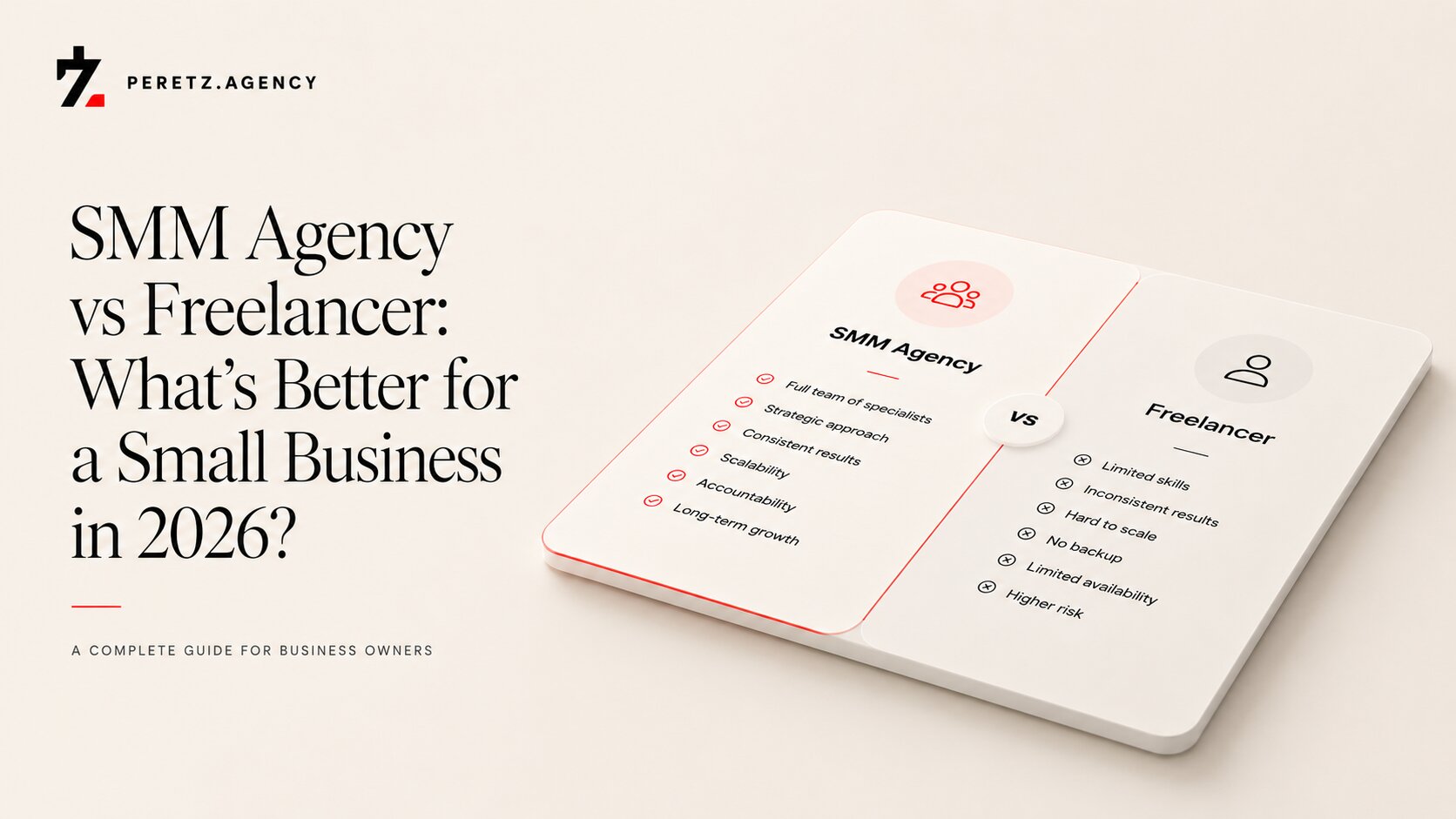
SMM Agency vs Freelancer: What's Better for a Small Business in 2026?

-
18. 06. 2026
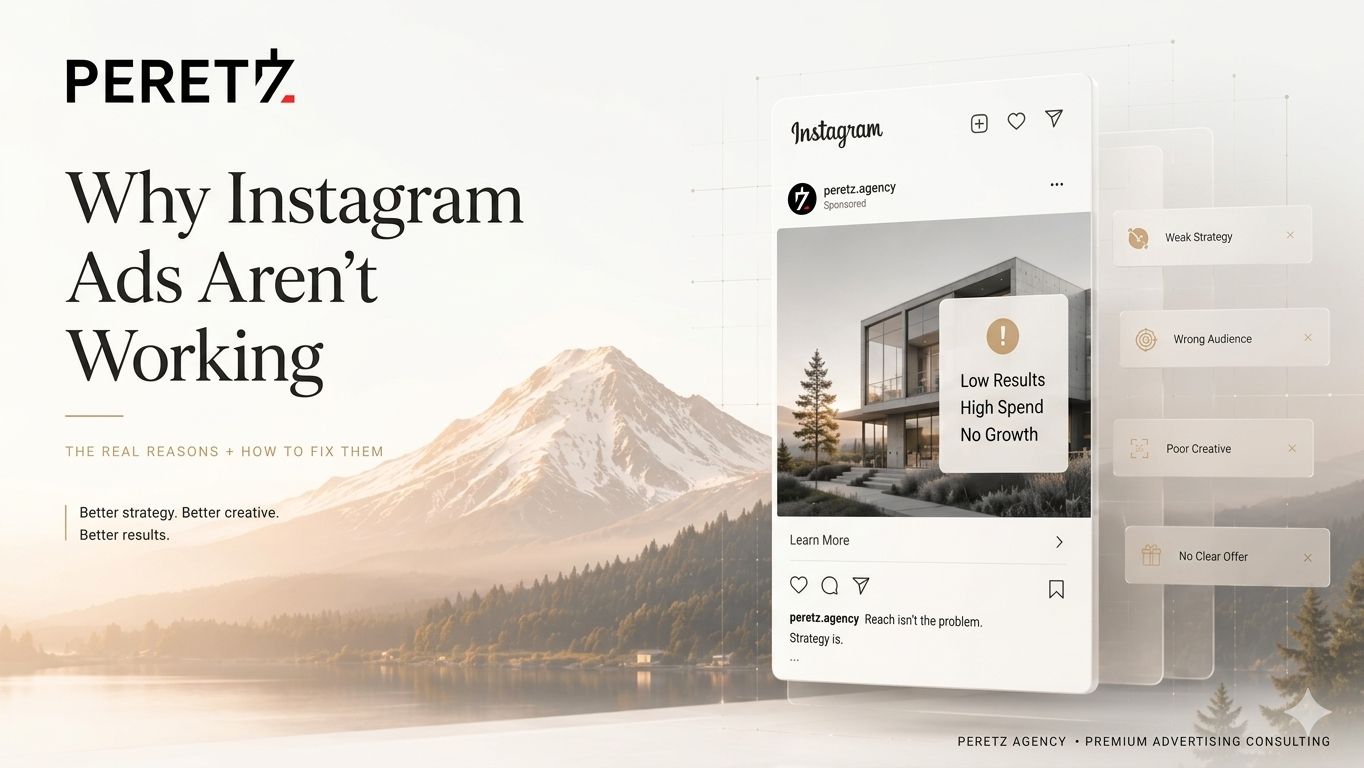
Why Your Instagram Ads Aren't Working in 2026 — And How to Fix Them
-
17. 06. 2026
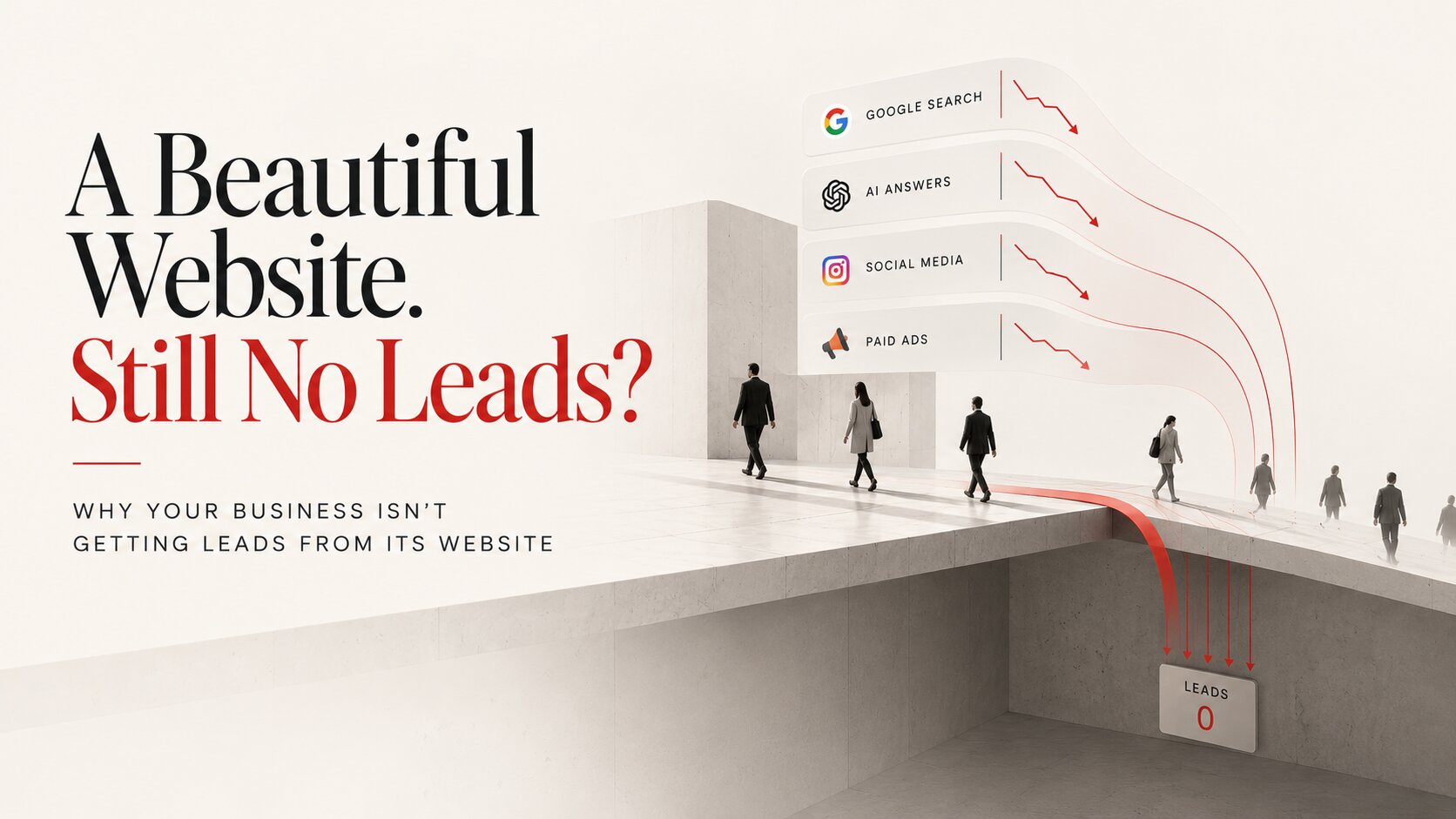
Why Your Business Isn't Getting Leads From Its Website (And How to Fix It in 2026)
-
20. 12. 2020
Why Your E-Commerce Store Needs a Blog in 2026 — And How to Start One That Actually Works
-
22. 06. 2026
Website Redesign Seattle: Why Most Business Websites Fail to Generate Leads (And How to Fix It)
-
18. 06. 2026
How Much Does a Website Cost in Bellevue WA in 2026?
-
29. 06. 2026
How AI Is Changing Product Development in 2026 (But Great Ideas Still Win)
-
30. 06. 2026
I Audited 50 Instagram Accounts This Year. Here's What Actually Separates Growth from Stagnation.
-
02. 07. 2026

I've Rebuilt My Career Twice Because of War. Here's What That Actually Teaches You About Strategy.
-
09. 07. 2026
Traffic But No Leads? Your Customer Is Doing Math You Never See
-
07. 09. 2026
What Is a Social Media Strategy and Why Does a Business Actually Need One?
-
24. 09. 2026

Social Media Strategy Is Not a Content Calendar
-
25. 09. 2026
How Many Social Media Posts Does a Business Really Need?