Website Redesign Seattle: Why Most Business Websites Fail to Generate Leads (And How to Fix It)



Chapters
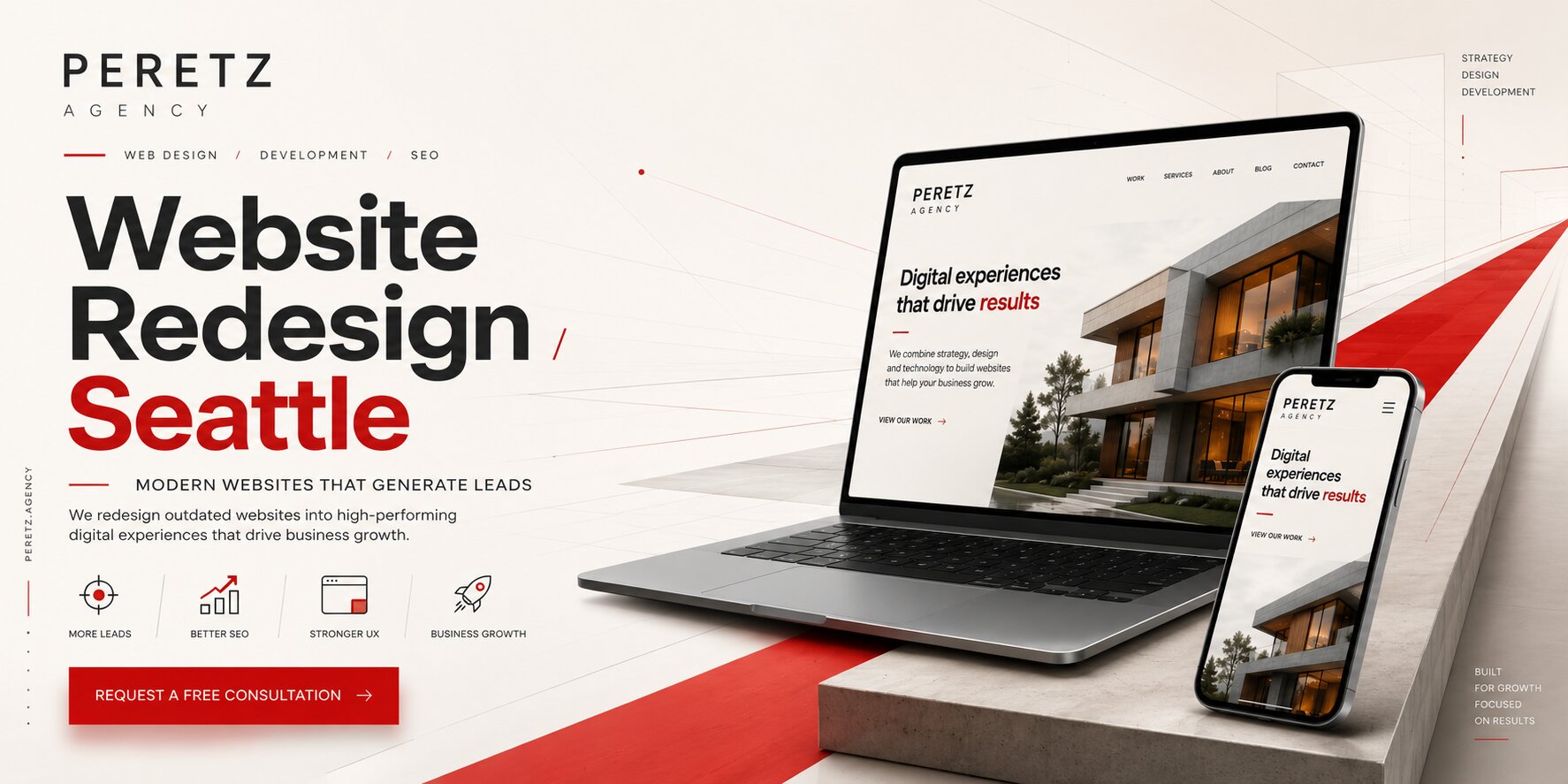
Most Seattle businesses that commission a redesign want one thing from it: more inquiries. Most of them get a better-looking website and roughly the same number of leads. The redesign did what it was asked to do. It was simply asked the wrong thing.
This article is about that gap: why a redesign so often leaves lead flow unchanged, how to tell in advance which problems a new design can fix and which it cannot, and how to scope the project so that the result is measured in inquiries, not in compliments.
A redesign changes how a site looks. Leads depend on how it works.
THE REDESIGN TRAP
Why a New Design Often Brings the Same Number of Leads
A typical redesign brief describes the look: modern, clean, more premium, closer to the brand. Agencies deliver exactly that. New colors, new photos, new typography, and the same page structure, the same headline logic, the same contact form at the bottom of the same pages.
Visitors do not decide to contact a business because of typography. They decide because, within a few seconds, they understand what the company does, believe it can solve their problem, and see an easy next step. If those three things were missing before the redesign and nobody named them in the brief, they are usually still missing after it.
That is why the most expensive redesigns are often the best-looking ones: the budget went into the surface, and the reasons visitors left were carried over intact.
WHERE LEADS ARE LOST
Three Places a Website Loses Leads
Before deciding what to redesign, it helps to locate the loss. Almost every lead problem sits in one of three places.
1. Reach: the right people never arrive
Traffic comes from the wrong area, the wrong queries, or barely comes at all. Visitors who could never become customers inflate the numbers, while the people who could are finding competitors instead. A redesign does not fix this by itself. Search visibility, targeting, and content do.
2. Understanding: visitors arrive and do not get it
The page opens with the company's history instead of the visitor's problem, the services are named in internal language, and nothing on the first screen tells a facilities manager in Bellevue or a founder in South Lake Union that this company is for them. This is a structure and messaging problem, and a well-scoped redesign can fix it.
3. Action: visitors are interested and still do not reach out
The next step is unclear, proof is missing at the moment of decision, the form asks for too much, or the phone number cannot be tapped on mobile. These are usually the fastest problems to fix, and many of them can be fixed without a redesign at all.
Each layer needs a different fix. A redesign that treats all three as "the website looks outdated" usually fixes none of them properly.
Find where the leads are lost before deciding what to rebuild.
MEASURE FIRST
What to Measure Before You Redesign
Without a baseline, nobody can say whether a redesign worked. Most businesses discover this a few months after launch, when the question "did the new site bring more leads?" has no answer.
Before any design work starts, record at least these numbers for the last three to six months:
- Inquiries per month, split into form submissions, phone calls, and emails
- The pages those inquiries start from
- Traffic by source, and which sources actually produce inquiries
- The mobile and desktop share of visitors, and the conversion rate of each
- How many people start the contact form and how many finish it
- Which pages bring organic search traffic today
The last point matters more than it looks. The pages that already rank are the pages a careless redesign is most likely to break.
HOW REDESIGNS LOSE LEADS
How a Redesign Can Lose Leads You Already Had
Sometimes lead flow does not stay the same after launch. It drops. The causes are almost always the same few:
- Old URLs changed without 301 redirects, so pages that ranked for years disappear from search
- Content that answered real questions was cut because it "didn't fit the new design"
- Contact forms or call tracking were rebuilt without being reconnected to analytics, so leads still arrive but nobody can see where from
- The new site is heavier and slower on mobile than the old one
- Form notifications go to an address nobody checks
None of these are design decisions, which is exactly why they get missed in a design-led project. We cover the full list in the website migration checklist most agencies skip.
The leads a redesign loses are usually the ones nobody was measuring.
A LEAD-FOCUSED BRIEF
How to Scope a Redesign Around Leads
A redesign brief meant to produce leads reads differently from one meant to produce a new look. It answers practical questions before anyone opens a design tool:
- What is the one action each type of page should lead to: a call, a consultation request, a quote, a purchase?
- What question does each key page answer for the visitor, in their words rather than ours?
- What proof exists today (projects, reviews, numbers, client names), and where on the page will it appear?
- What is the shortest form that still qualifies a lead?
- Which existing URLs rank or bring inquiries, and where will each of them redirect?
- How will inquiries be tracked from the first day after launch?
A brief like this also keeps the budget honest. When the goal is stated in inquiries, it becomes obvious which parts of the site deserve most of the work and which only need a refresh. Hidden costs tend to surface exactly at this stage, see the hidden technical debt that makes website redesigns more expensive than planned.
REDESIGN OR FIX
When You Do Not Need a Redesign at All
If the losses sit mainly in the action layer, a full redesign is often the slowest and most expensive way to fix them. Clearer calls to action, proof placed next to the decision, a shorter form, and a faster mobile page can be changed on the existing site in weeks. The specific patterns are covered in why your business isn't getting leads from its website.
A redesign is justified when the problem is the structure itself: the site cannot present what the business sells today, every important change requires a developer, or the platform is too slow and fragile to improve piece by piece. Often the real need is a new structure rather than a new look, a distinction explained in most companies don't need a new website, they need a new structure.
If a redesign is the right call, the process and price ranges for Seattle are in Website Redesign Seattle: we build sites that generate leads and how much a website costs in Seattle in 2026.
FAQ
Frequently Asked Questions
Why did my leads drop after a website redesign?
Usually because something that worked was removed or disconnected: old URLs left without 301 redirects, pages with ranking content deleted, forms or call tracking not reconnected, or a slower mobile version. Compare the pages that brought organic traffic and inquiries before launch with the new site, and check the redirects first.
How do I know whether to redesign or fix my current website?
Look at where leads are lost. If visitors arrive, understand the offer, and still do not reach out, targeted fixes to calls to action, proof, and forms are usually enough. If the site cannot present the business as it is today, or every change needs a developer, a redesign makes sense.
What should I measure before starting a redesign?
Monthly inquiries by channel (forms, calls, email), the pages they start from, the traffic sources that produce inquiries, mobile and desktop conversion, form starts versus completions, and the pages that bring organic search traffic. Without this baseline you cannot tell whether the redesign worked.
How soon after a redesign should I see more leads?
Compare full months, not the first week. A fair check is the same 60 to 90 day period before and after launch, measured with the same tracking. Search traffic can dip for a while after a migration even when redirects are correct, so judge by inquiries, not by visits alone.
What should a redesign brief include if the goal is more leads?
The target action for each page type, the question each key page answers, the proof that will appear and where, the shortest form that still qualifies a lead, a redirect map for existing URLs, and a tracking plan that works from launch day.
Ready to Fix Your Website?
If your site is outdated, slow, or failing to generate leads, let's build a plan to fix it. Request a free consultation and we'll tell you exactly what we'd do differently.
Not sure if you need a full redesign? A Usability Audit is the fastest way to find out what's holding your site back, without committing to a full project upfront.
Further reading: Why Your Business Isn't Getting Leads From Its Website · Business Process Automation & Digitalization in Kirkland · Website Redesign Seattle | We Build Sites That Generate Leads
- Share
-
-

-

-
Related Reading
-
06. 04. 2021

How to Rank Your Google Business Profile Higher in 2026 (Without Paying for Ads)

-
18. 06. 2026
How to Hire a Remote Dev Team Without Getting Burned
-
18. 06. 2026
How Much Does a Website Cost in Bellevue WA in 2026?
-
15. 06. 2026
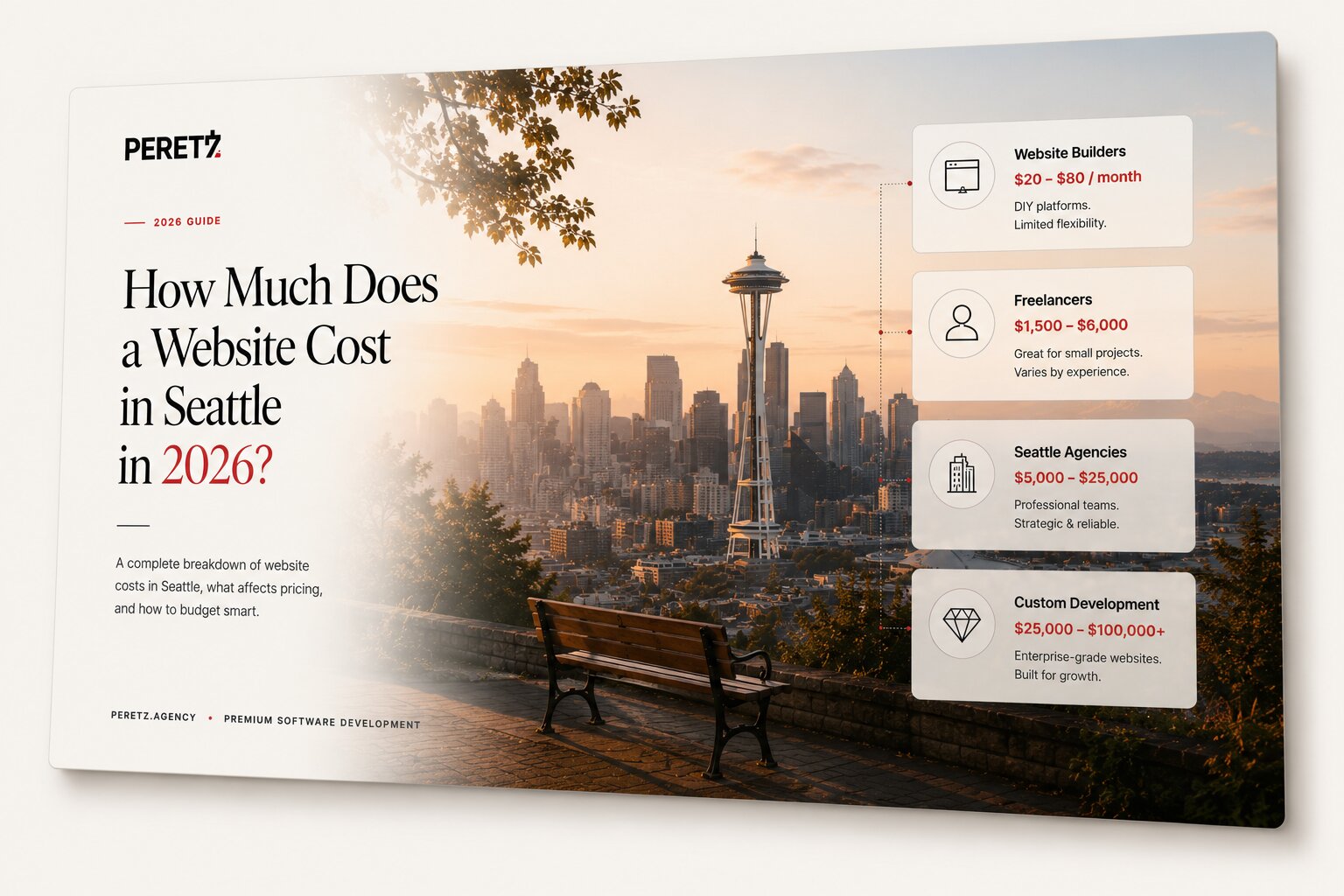
How Much Does a Website Cost in Seattle in 2026?
-
26. 06. 2026

How to Build a Social Media Strategy That Actually Generates Leads
-
30. 06. 2026

The Most Expensive Mistake Business Owners Make Before Hiring a Digital Agency
-
23. 07. 2026

What Good Web Design Actually Does Once the Structure Is Right
-
18. 06. 2026

Website Redesign Seattle | We Build Sites That Generate Leads