Type at least 3 letters to search

Lado

Some brands are built around a profession. Others are built around a point of view. LADO was the second kind.

When we started working on the identity, the task was not to create another personal brand for a business consultant, financial advisor or executive coach. Lado was building a completely different role for himself: a hunter for companies with history and energy. Not young startups, not businesses looking for another consultant.

Companies that had already lived long enough to accumulate something that cannot be bought or recreated from scratch: reputation, relationships, knowledge, trust and the experience of several generations. A moment when a third-generation partner can say, “My grandfather worked with you,” is impossible to manufacture. It can only be found.

And finding exactly these companies became the foundation of Lado's positioning. This distinction was critical: Lado didn't want to be perceived as someone who simply gives advice about what a company should do next. His role was much closer to finding, evaluating, acquiring and rebuilding businesses with proven history.

The positioning eventually crystallized into a simple phrase: “A hunter for companies with history and energy.” It gave the brand something most personal brands lack: a very specific territory. The focus was deliberately narrow, companies with decades of history, often family-owned and spanning at least two generations. That narrowness was not a limitation. It was the brand.

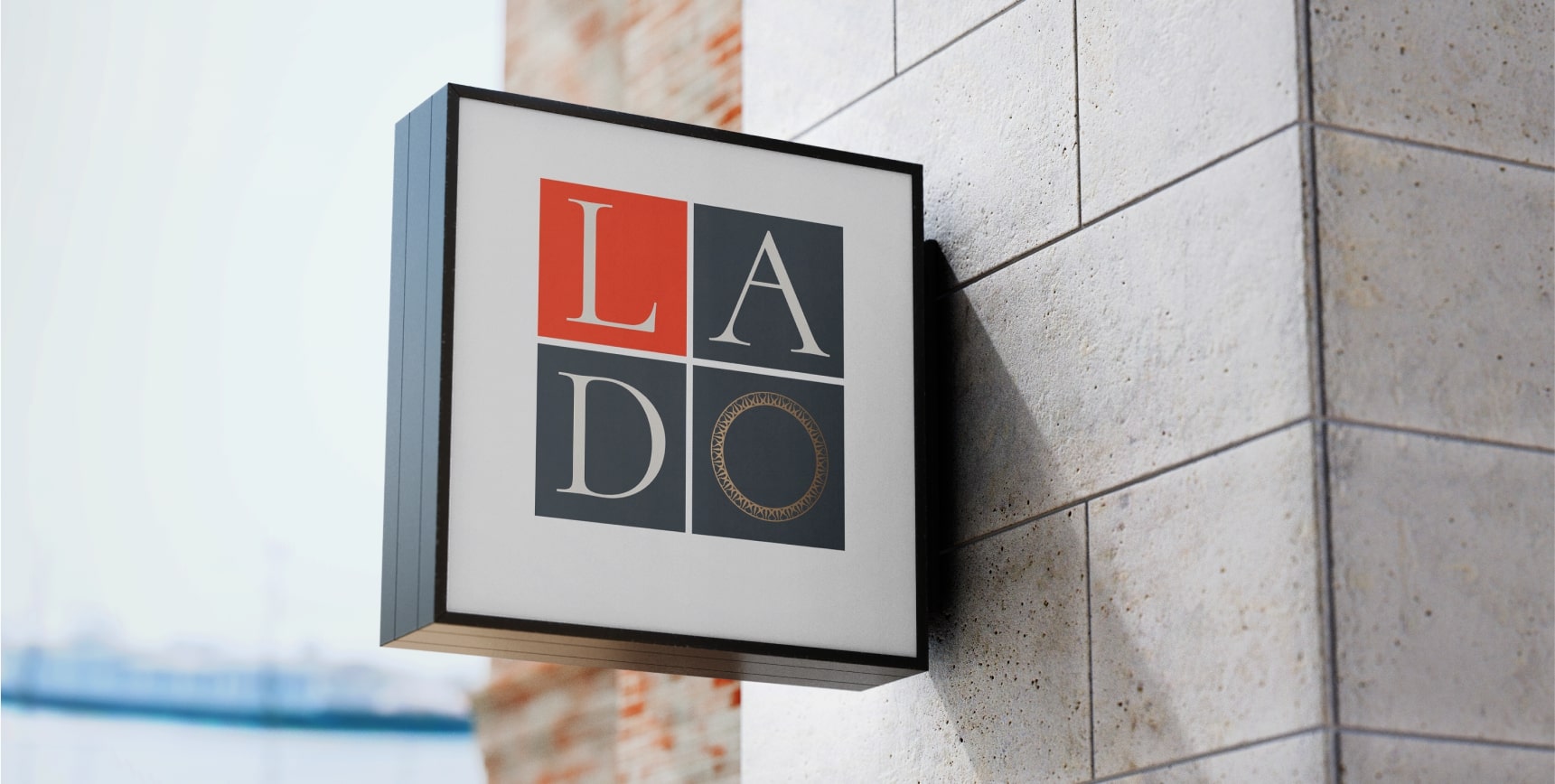
The logo was built around two symbols: the Sun and the sign of Shiva. The Sun became a symbol of energy, life and the force that allows something to continue shining over time. Shiva introduced another dimension, transformation, the ability to destroy what has stopped working and create the conditions for something new. Together, the two symbols reflected the philosophy behind Lado's work: find what has real energy, preserve what is valuable, transform what needs to change, give it another life.

That was especially important for companies with heritage. The objective was never simply to “modernize an old business.” It was to recognize the value that already existed inside it and build a new future around that value. The visual identity therefore had to feel confident, mature and slightly unconventional, closer to a personal philosophy than to a conventional consulting firm.

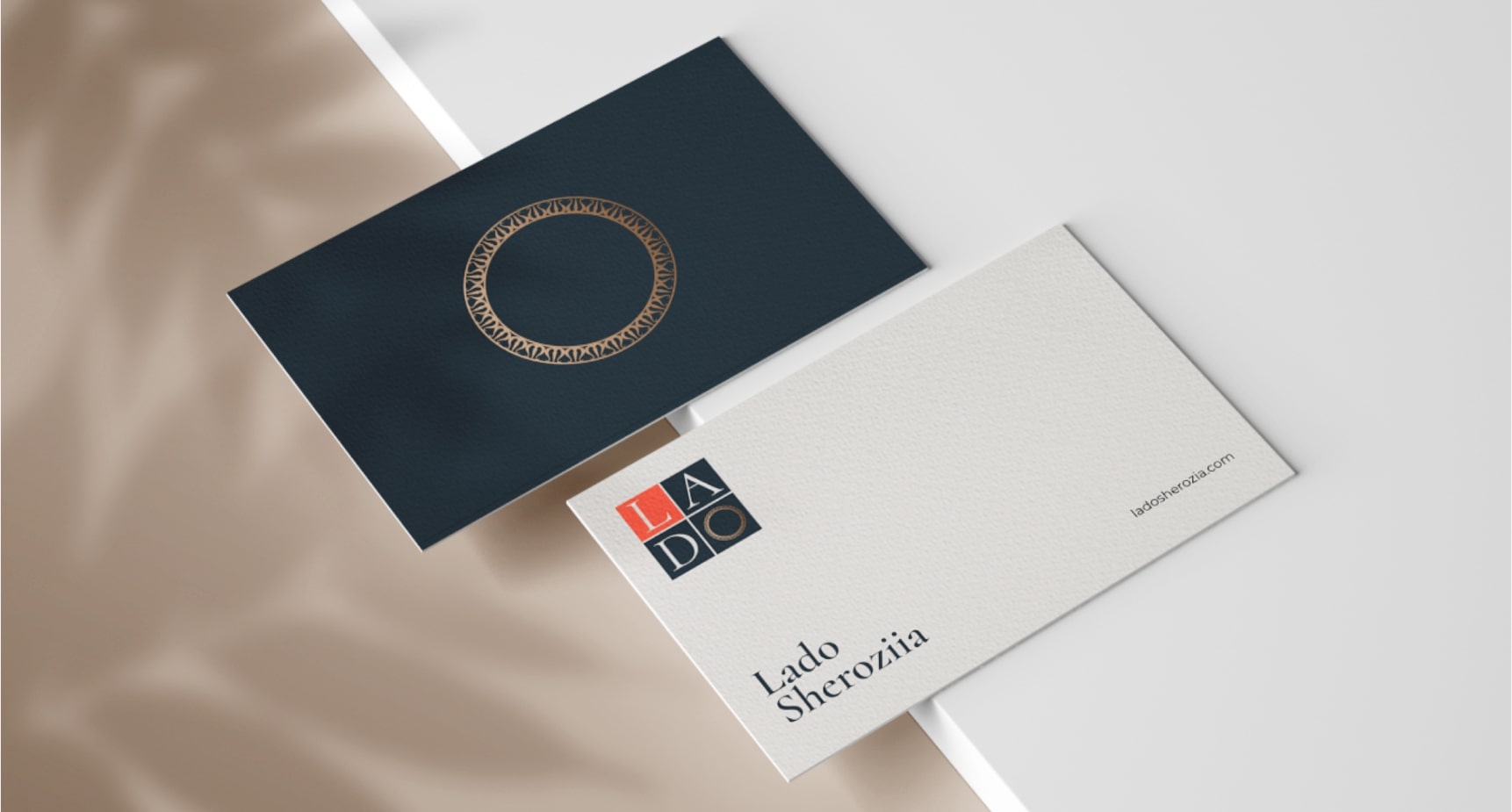
The identity system was designed to work across Lado's personal communications, presentations, business materials and future digital presence. We treated the logo not as an isolated graphic, but as the central element of a broader visual language. The system had to be strong enough to sit next to companies with decades of history without competing with them. Lado's brand should not look like another young company trying to manufacture authority. Its authority had to come from what it recognizes and what it has already done.

And there was already a track record behind the positioning. Lado founded Laduchi Consult, and remains an advisor to its board today. Schoeffel, a heritage brand Lado and Laduchi now run together, is one of the clearest examples of the philosophy in practice: finding a business with real history and building its next chapter. We wrote more about that partnership in the Laduchi case study and in Building the Next Century: the Peretz × Schoeffel digital transformation. See both in our portfolio: Laduchi Consult and Schoeffel.

One of the most important ideas behind the project was that the brand shouldn't become a catalogue of competencies. The strategy eventually formulated it very directly: sell the philosophy and the association, not the services. There is a reason for the hunt. There is a type of company worth hunting for. There is a philosophy behind acquiring such a company. And there is a person who knows how to recognize what others might overlook.

When you acquire a company that has existed for decades, you are not simply buying its current revenue or its physical assets. You are buying time: relationships that took generations to build, reputation that survived changes in markets, technologies and people, knowledge that never appeared in a business plan because it was simply passed from one generation to another. That accumulated time is the real asset, and Lado's specialization is finding where that asset still has energy.

LADO became an identity for a very particular kind of business person. Not a consultant, not a coach, not an investment company hiding behind generic corporate language. A hunter. Someone looking for companies whose history has already proved their value, and who sees transformation not as erasing that history, but as giving it another chapter.