

The debate isn't new. But in 2026, the rules have changed.
For the past decade, the in-house vs outsourcing conversation revolved around cost. Offshore developers were cheaper. Local teams were more controllable. Most businesses picked a side based on budget.
That logic still applies, but it's no longer the whole picture.
In 2026, a third factor has entered the equation: AI-augmented execution. A single outsourced specialist with the right tools can now deliver what a five-person in-house team produced three years ago. And a bloated in-house department without AI integration is burning budget faster than ever.
Here's what you actually need to know before making this decision.
IN-HOUSE COSTS
What In-House Really Costs in 2026
Building an internal web design and development team in Seattle, Bellevue, or any major US market means budgeting for:
- Senior developer: $120,000–$180,000/year
- UI/UX designer: $90,000–$130,000/year
- Project manager: $80,000–$110,000/year
- Benefits, taxes, equipment, office: add 30–40% on top
A lean three-person team costs $400,000–$600,000 per year before a single line of code is written.
For companies generating consistent digital revenue, this investment can make sense. For everyone else, it's infrastructure before product-market fit.
WHAT OUTSOURCING DELIVERS
What Outsourcing Actually Delivers in 2026
Outsourcing has a reputation problem it doesn't deserve.
The 2016 model, offshore developers in a different timezone, slow communication, inconsistent quality, still exists. But it's no longer the standard.
In 2026, mature outsourcing partners offer:
- Dedicated teams that work in your timezone
- AI-assisted design and development workflows
- Faster delivery cycles than most in-house teams
- Transparent project management via shared tools
- Contractual accountability with defined milestones
The gap in quality between a strong outsourcing partner and an average in-house team has narrowed significantly. The gap in cost has not.
DECISION FRAMEWORK
The Real Decision Framework
Forget the generic pros and cons lists. Ask these questions instead:
1. Is digital your core product, or a support function?
If your website exists to generate leads and represent your brand, outsourcing delivers better ROI. If your digital platform is your product, in-house gives you the control you need.
2. Do you need speed or continuity?
Outsourcing wins on speed for defined projects. In-house wins for long-term institutional knowledge.
3. What does your market demand?
In competitive markets like Seattle, consulting, law, architecture, tech, your website is a trust signal. The question isn't who builds it. It's whether it performs.
4. Who owns the system after launch?
This is the question most businesses skip, and the one that costs the most later. A platform nobody in-house understands becomes technical debt the moment the outsourced team moves on to the next client. Decide who maintains the system before deciding who builds it.
5. Will your business outgrow whichever model you pick within a year?
Growth changes the math faster than most owners expect. A lean outsourced setup that fits a five-person startup can become the bottleneck the moment the business needs daily iteration at scale. An in-house team sized for today's roadmap can sit half-idle for a year while the company figures out what it actually needs next. Price in where the business is headed, not just where it is now.
WHAT AI CHANGES
What AI Changes About This Decision
In-house teams without AI integration are slower and more expensive than outsourced teams that use it well.
In 2026, agencies like Peretz Agency deploy AI across the entire workflow: research, wireframing, content architecture, visual generation, QA. This doesn't replace strategic thinking. It eliminates the time spent on execution that previously inflated project timelines and costs.
The result: a custom website that once took 3–4 months now takes 6–8 weeks at the same quality level. Which functions are worth handing to a partner in the first place is covered in Which Business Functions Should You Outsource in 2026?
GETTING IT WRONG
What Getting This Wrong Actually Looks Like
The cost of the wrong choice rarely shows up as one bad decision. It shows up months later, in specific, recognizable symptoms.
An overbuilt in-house team looks like this: senior salaries paid to maintain a website that could run on a fraction of the budget, a roadmap padded with work invented to justify headcount, decisions slowed down by internal politics an outsourced partner would never have patience for.
An undersupported outsourcing relationship looks like something else entirely: nobody internally can explain how the system actually works, every small change means going back to the agency, and the moment that agency's attention moves to a bigger client, updates start taking weeks instead of days.
Both patterns are avoidable. Both start with skipping the ownership question above, not with picking the wrong model in the first place.
BOTTOM LINE
The Bottom Line
Neither model is universally better. But for most businesses in competitive US markets, the math in 2026 looks like this:
Outsource when you need a high-quality digital presence without building a department around it.
Build in-house when your product is the platform and you need daily iteration at scale.
Everything in between is a hybrid, and that's where most serious businesses land. In practice, a working hybrid usually splits along a specific line: strategy, product decisions, and system ownership stay in-house, even if that's one person, while execution, design, development, and QA get outsourced to a partner who can flex with the workload. The in-house side isn't there to write code. It's there to own the decisions and the relationship with whoever does. It is the same underlying calculation we cover in The Build vs. Buy Equation Has Changed, applied specifically to who builds and runs the platform, not just which software to license.
If outsourcing is the right call, the next decision is what gets built: a custom platform or a website builder depends on the same questions this framework raises, just answered at the technology layer instead of the staffing layer. The same audit-first discipline applies to social media strategy too, see the actual process, step by step.
WORKING WITH US
Working With Peretz Agency
We build custom websites and digital systems for businesses in Seattle, Bellevue, and across the US market.
If you're evaluating whether to outsource your web presence or rebuild your digital infrastructure, we're happy to have that conversation.
No generic proposals. Just a clear assessment of what your business actually needs.
The same logic applies to picking a CRM platform, not just who builds or runs it, see which CRM is right for your business.
- Share
-

-

-

-

Related Reading
-
02. 12. 2020
Redesign of Sports Online Store Sport Discount

-
15. 06. 2026
AI-Powered Web Design and AI Video Editing in 2025-2026
-
30. 11. 2020

The case of Laduchi
-
18. 06. 2026
How Much Does a Website Cost in Bellevue WA in 2026?
-
18. 06. 2026
How to Hire a Remote Dev Team Without Getting Burned
-
16. 03. 2021
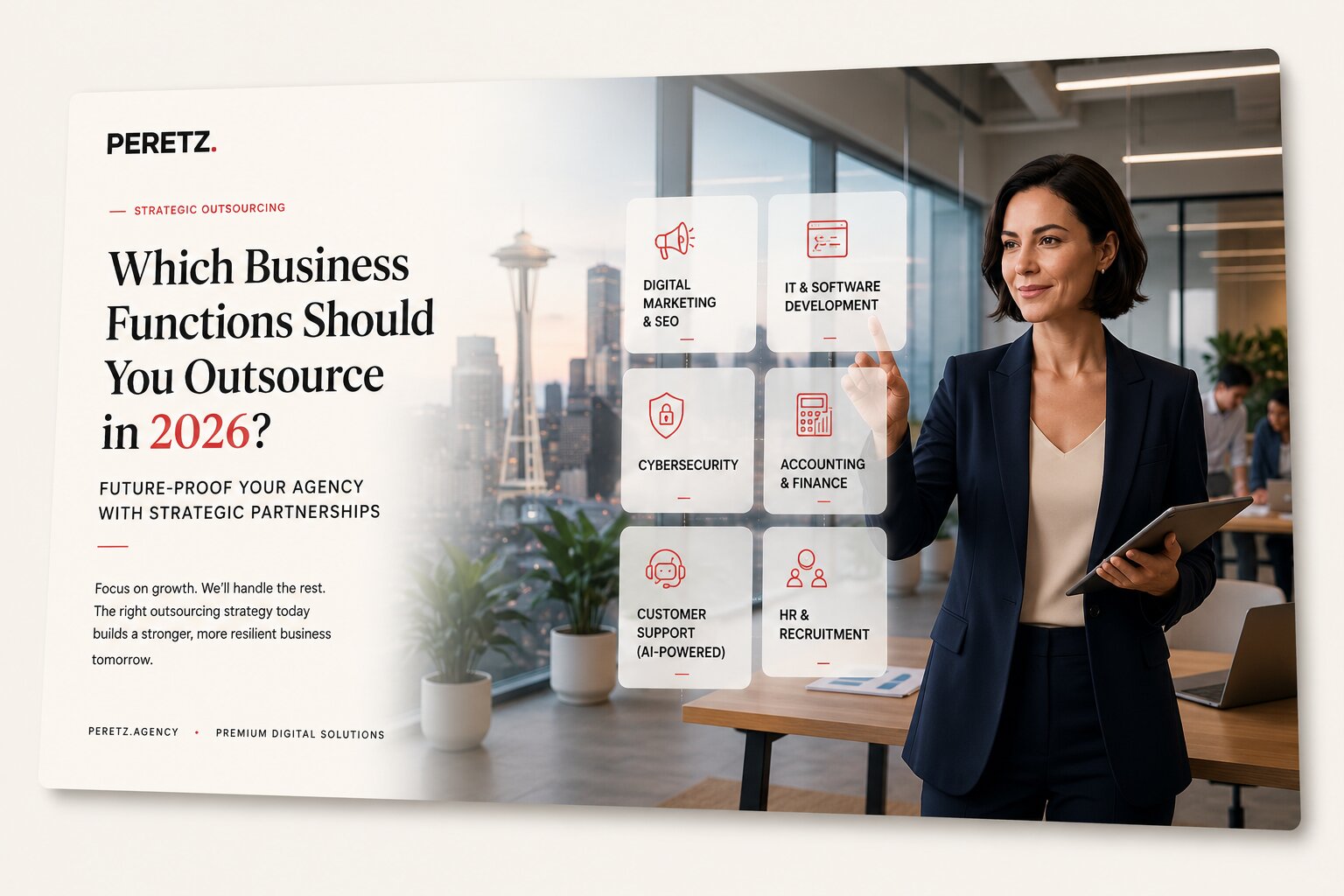
Which Business Functions Should You Outsource in 2026?
-
04. 07. 2026

What Twenty Years Taught Me About Building Digital Businesses
-
17. 07. 2026
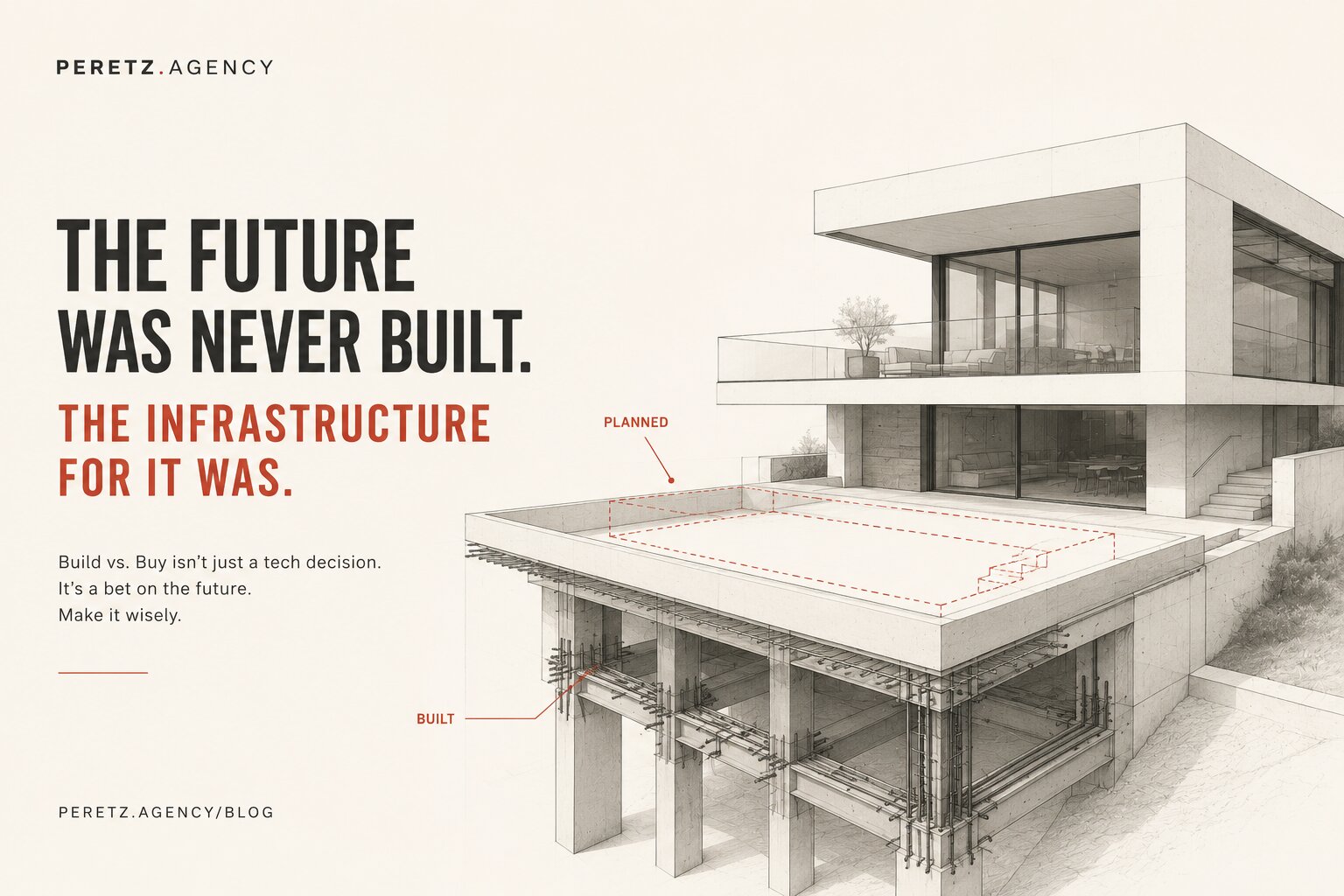
The Build vs. Buy Equation Has Changed. Most Companies Have Not Recalculated It.
-
23. 08. 2026
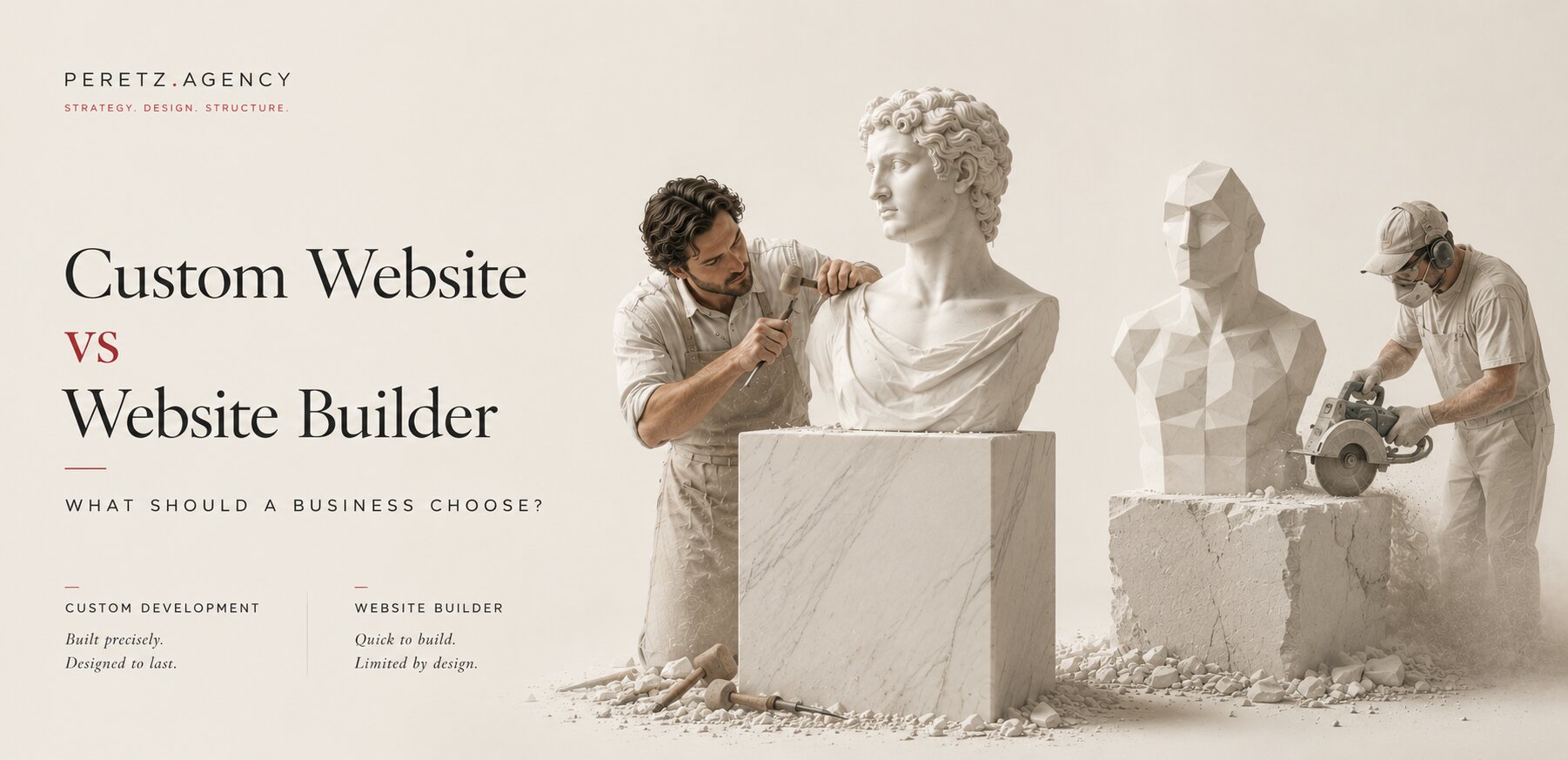
Custom Website vs Website Builder: What Should a Business Choose?
-
17. 07. 2026
The Code Remembers Every Version of the Business
-
08. 09. 2026
How to Build a Social Media Strategy for a Business, The Actual Process, Step by Step
-
10. 09. 2026
Which CRM Is Right for Your Business? A Practical Guide to Choosing a CRM System